

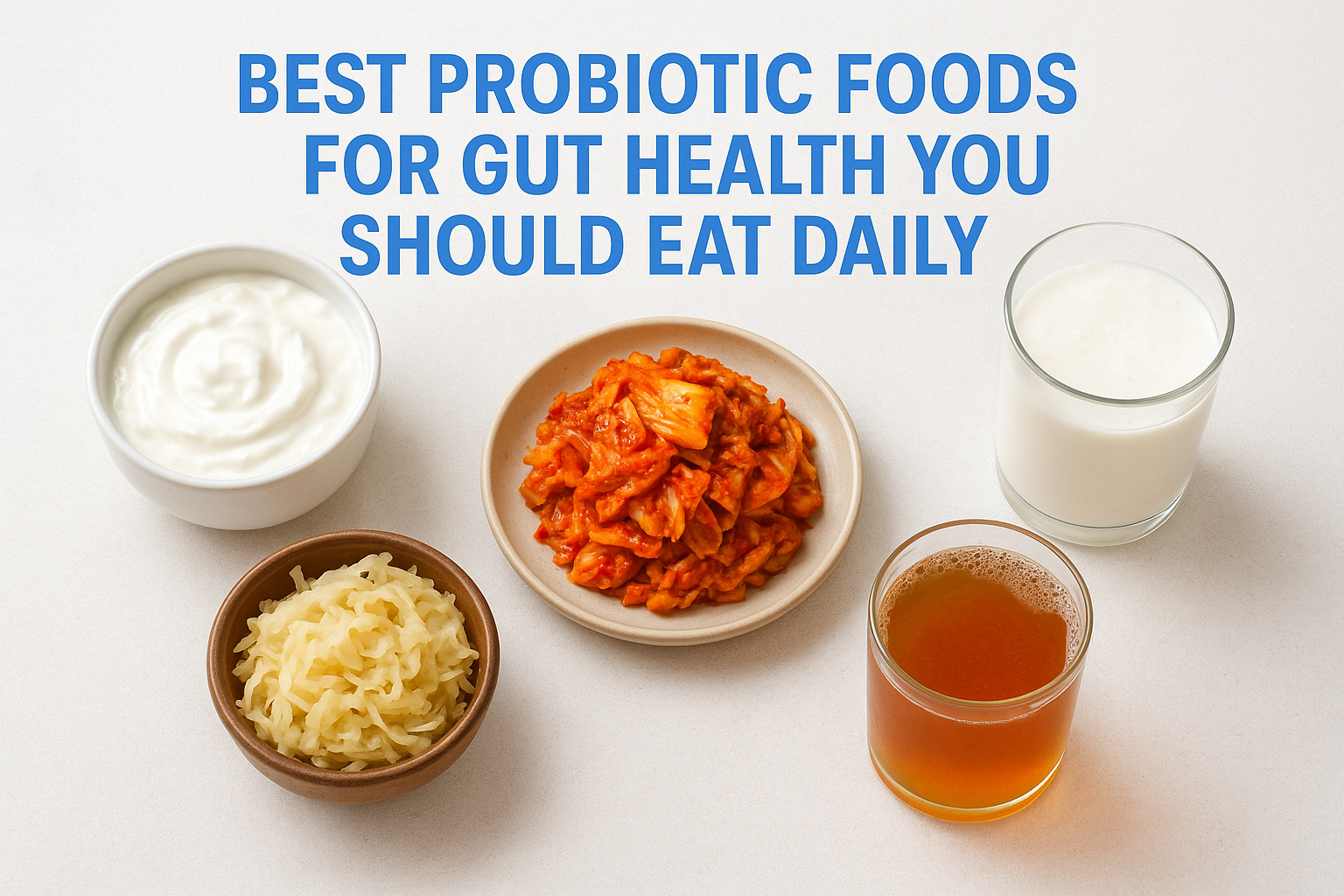
Your gut sends signals all day long, bloating after meals, sluggish digestion, energy crashes that don’t match your sleep. Often the fix isn’t a supplement aisle full of pills, it’s the food already sitting in your grocery store. The best probiotic foods for gut health are natural, affordable, and easier to work into your meals than most people realize.
If you’re searching for real answers instead of marketing claims, here’s the direct one: fermented foods like yogurt, kefir, sauerkraut, kimchi, and miso contain live bacterial cultures that can help restore your gut microbiome and support smoother digestion. These aren’t trendy additions, cultures have relied on them for centuries, and modern research keeps confirming why they work.
In this list, you’ll find the specific foods worth adding to your plate, what makes each one effective, and simple ways to eat them daily without overhauling your entire diet. Whether you’re new to fermented foods or already keep a jar of kimchi in the fridge, you’ll walk away with a practical daily list and a clearer sense of which options actually move the needle for your digestion.
1. Yogurt
Yogurt is the easiest entry point into probiotic eating, and there’s a good chance you already have some in your fridge. It’s milk that’s been fermented by live bacterial cultures, which thicken the texture and produce that familiar tang. Not every tub on the shelf counts though. Heat-treated or overly processed yogurts can kill off the very bacteria you’re trying to eat, so checking the label for "live and active cultures" matters more than the brand name on the front.
Key probiotic strains
Most commercial yogurts contain Lactobacillus bulgaricus and Streptococcus thermophilus, the two starter cultures required by law to call a product yogurt in the first place. Better brands go further and add Lactobacillus acidophilus or Bifidobacterium strains, which are the ones tied more directly to gut and immune benefits. A quick label scan tells you what you’re actually getting:
- Basic yogurt: L. bulgaricus, S. thermophilus
- Probiotic-enhanced yogurt: adds L. acidophilus, Bifidobacterium lactis, or L. casei
- Greek yogurt: same cultures, strained for higher protein and thicker texture
Gut health benefits
Regular yogurt consumption has been linked to improved lactose digestion, reduced bloating, and a more balanced gut microbiome, according to research summarized by the National Institutes of Health. The live cultures help crowd out less friendly bacteria and support your intestinal lining, which plays a direct role in nutrient absorption and immune signaling.
A cup of live-culture yogurt a day does more for your digestion than most supplement bottles ever will.
Beyond digestion, yogurt’s calcium and protein content make it one of the few foods that supports both bone health and gut health in the same bite, which is rare for a single food item.
How to add it to your daily diet
You don’t need a recipe overhaul, just a habit shift. Try these:
- Swap your usual breakfast for plain Greek yogurt topped with berries and a drizzle of honey.
- Use yogurt instead of sour cream on tacos, baked potatoes, or soups.
- Blend it into smoothies for extra creaminess without added sugar.
- Keep single-serve cups on hand for a fast afternoon snack.
Stick with plain, unsweetened varieties when you can. Flavored yogurts often pack in sugar that offsets the benefits you’re eating for in the first place.
2. Kefir
Kefir looks like drinkable yogurt, but it packs a wider range of microbes and a tangier, slightly fizzy bite. Made by fermenting milk with kefir grains, a cluster of bacteria and yeast, this drink often contains ten times more strains than a typical cup of yogurt. Kefir grains aren’t actual grains at all, they’re symbiotic colonies that ferment milk into something far more potent than most dairy products on the shelf.
Key probiotic strains
Researchers have identified over 30 species of bacteria and yeast in traditional kefir, though counts vary by batch and brand. Common strains include:
- Lactobacillus kefiri
- Lactobacillus acidophilus
- Bifidobacterium species
- Saccharomyces yeasts
This mix of bacteria and yeast working together is what sets kefir apart from single-strain probiotic products.
Gut health benefits
Studies referenced by the National Institutes of Health link kefir consumption to improved lactose tolerance, reduced inflammation, and stronger gut barrier function. Its yeast content also helps it survive stomach acid better than some bacteria-only foods, meaning more live cultures actually reach your intestines.
Kefir’s mix of bacteria and yeast gives your gut a broader team of workers than yogurt alone can offer.
Some people who react poorly to milk still tolerate kefir well, since fermentation breaks down much of the lactose during the process.
How to add it to your daily diet
Pour a small glass in the morning instead of coffee creamer in your routine. Blend it into smoothies for a probiotic boost. Drizzle it over granola or oats as a tangy alternative to milk.
3. Sauerkraut
Sauerkraut takes the process a step further than dairy ferments, using just cabbage and salt instead of milk. Wild bacteria naturally present on the cabbage leaves drive the fermentation, breaking down sugars and producing lactic acid that gives sauerkraut its sour bite. Raw sauerkraut sold in the refrigerated section still contains live cultures, while shelf-stable jars at room temperature have usually been pasteurized, which wipes out the bacteria you’re after.

Key probiotic strains
Cabbage ferments host a rotating cast of bacteria as the process unfolds, starting with less dominant strains and finishing with hardier ones. You’ll typically find:
- Leuconostoc mesenteroides, the strain that kicks off fermentation
- Lactobacillus plantarum, which takes over and dominates later stages
- Lactobacillus brevis in smaller amounts
This progression is why homemade batches often taste different week to week, the bacterial balance keeps shifting.
Gut health benefits
Unpasteurized sauerkraut delivers fiber alongside its live cultures, a combination that feeds beneficial bacteria while adding bulk to digestion. Research compiled by the National Institutes of Health points to fermented vegetables supporting gut barrier integrity and reducing markers of inflammation over time.
Fiber and live bacteria together do more for your gut than either one working alone.
Vitamin C and K also survive the fermentation process, adding nutritional value beyond digestion alone.
How to add it to your daily diet
Spoon a small serving over grilled sausages, tacos, or roasted vegetables. Add it cold to sandwiches for crunch and tang. Start with a tablespoon daily if you’re new to it, since a sudden large serving can cause temporary bloating.
4. Kimchi
Kimchi brings heat and funk to the fermentation game, built from napa cabbage, radish, garlic, ginger, and chili flakes packed into a salty brine. Korean households have relied on this dish for generations, not just for flavor but for the digestive punch it delivers. Traditional kimchi ferments at cool temperatures for days or weeks, letting wild bacteria transform crunchy vegetables into something tangy, spicy, and alive with cultures.

Key probiotic strains
Kimchi’s fermentation runs on a similar bacterial cast as sauerkraut, though the added vegetables and spices shift the balance slightly. Expect to find:
- Lactobacillus plantarum, the dominant workhorse strain
- Lactobacillus brevis
- Leuconostoc mesenteroides, active early in the process
- Weissella koreensis, unique to Korean-style ferments
This combination gives kimchi a slightly different bacterial fingerprint than cabbage ferments made without the chili paste and fish sauce.
Gut health benefits
Studies referenced by the National Institutes of Health associate kimchi consumption with improved gut microbial diversity, reduced inflammation, and better metabolic markers. The fiber-rich vegetables feed beneficial bacteria already living in your gut, while the live cultures add reinforcements from the outside.
Spice and probiotics rarely team up this well, kimchi manages both without sacrificing either.
Garlic and ginger contribute their own antimicrobial compounds, adding another layer of gut support beyond the bacteria alone.
How to add it to your daily diet
Serve a small side with rice and grilled protein at dinner. Fold it into fried rice near the end of cooking to preserve some live cultures. Top avocado toast or eggs with a spoonful for a quick, spicy morning boost.
5. Kombucha
Kombucha rounds out this list as the fizzy option, brewed by fermenting sweetened black or green tea with a SCOBY, a symbiotic culture of bacteria and yeast that floats on top like a rubbery disc. Over a week or two, that culture converts sugar into a tangy, effervescent drink loaded with live organisms. Store-bought kombucha varies widely in quality, so check for "raw" or "unpasteurized" on the label if you want the bacteria still intact.
Key probiotic strains
Kombucha’s SCOBY hosts a mix that shifts depending on the brewer and batch, but common contributors include:
- Acetobacter species, which produce the tangy acidity
- Gluconobacter
- Saccharomyces yeasts
- Lactobacillus strains in smaller amounts
This bacteria-yeast partnership mirrors kefir more than it does vegetable ferments like kimchi or sauerkraut.
Gut health benefits
Early research, including studies noted by the National Institutes of Health, suggests kombucha may support digestive comfort and contribute antioxidant compounds from the tea base. Its organic acids also create an environment less hospitable to harmful bacteria in your gut.
A cold glass of kombucha does double duty, feeding your gut while curbing a soda craving.
Keep portions modest since sugar content varies by brand, and some bottles pack more than you’d expect for a "health drink."
How to add it to your daily diet
Swap your afternoon soda for a small bottle of kombucha instead. Mix it with sparkling water if the tang feels strong at first. Rotate flavors weekly to keep things interesting without falling back on sugary sodas.

Making these foods part of your routine
You don’t need all five foods on your plate at once to see results. Pick one or two that fit your taste and start there, a morning kefir, an afternoon spoonful of kimchi, whatever feels doable on a Tuesday. Consistency matters more than variety when you’re just starting out, so build the habit before you expand the menu.
Gut health isn’t a one-week fix. The best probiotic foods for gut health work because you keep eating them, week after week, letting live cultures reinforce your microbiome over time. Give it a month before judging results, digestion often improves gradually rather than overnight.
If you’re ready to stock your kitchen with quality fermented staples and other whole-food essentials, browse the organic pantry picks at Worganic Foods and start building a gut-friendly routine that actually sticks.
Discover more from Woganic Blog
Subscribe to get the latest posts sent to your email.







Leave a Reply
Your email is safe with us.