The terms get tossed around interchangeably at grocery stores, on social media, and even by well-meaning friends. But when you actually compare a plant-based diet vs vegan diet, you’ll find they aren’t the same thing. One is rooted in health choices, the other in ethical conviction, and that distinction shapes everything from what ends up on your plate to how you approach food labels at the store.
Understanding the difference matters, especially if you’re making intentional choices about what you eat and why. At Worganic Foods, we help people navigate exactly these kinds of decisions by breaking down organic and natural food topics without the jargon. Whether you’re leaning toward one approach or simply trying to figure out which path fits your goals, clarity is the first step.
This article walks through the core definitions, food inclusions and exclusions, motivations behind each approach, and the health benefits they offer. By the end, you’ll have a straightforward understanding of both diets, and enough context to decide which one actually aligns with your lifestyle.
Why these terms cause so much confusion
The food industry and mainstream media treat “plant-based” and “vegan” as synonyms, and that’s the root of most of the confusion. You’ll see a fast-food chain promote a “plant-based burger” while a vegan activist uses the same phrase to describe their entire lifestyle. Both uses make sense in context, but they point at very different things.
The language overlaps in ways that mislead
When companies began marketing “plant-based” products, they borrowed the term from nutrition researchers who used it to describe diets centered on whole plants and minimally processed foods. The food industry then applied it to anything without animal ingredients, including heavily processed meat alternatives. Now the label shows up on everything from protein powders to fast food, which makes it feel interchangeable with “vegan” even when the underlying philosophies differ.
The result is that you encounter two separate meanings depending on who’s using the word. A registered dietitian saying “plant-based diet” likely means a whole-food approach built around vegetables, legumes, and grains. A product company printing “plant-based” on its packaging likely just means no meat or dairy was used. Neither definition is wrong, but neither gives you the complete picture on its own.
The word “plant-based” started as a clinical nutrition term, not a marketing label, and that original meaning still shapes how health professionals use it today.
Motivation is what actually separates them
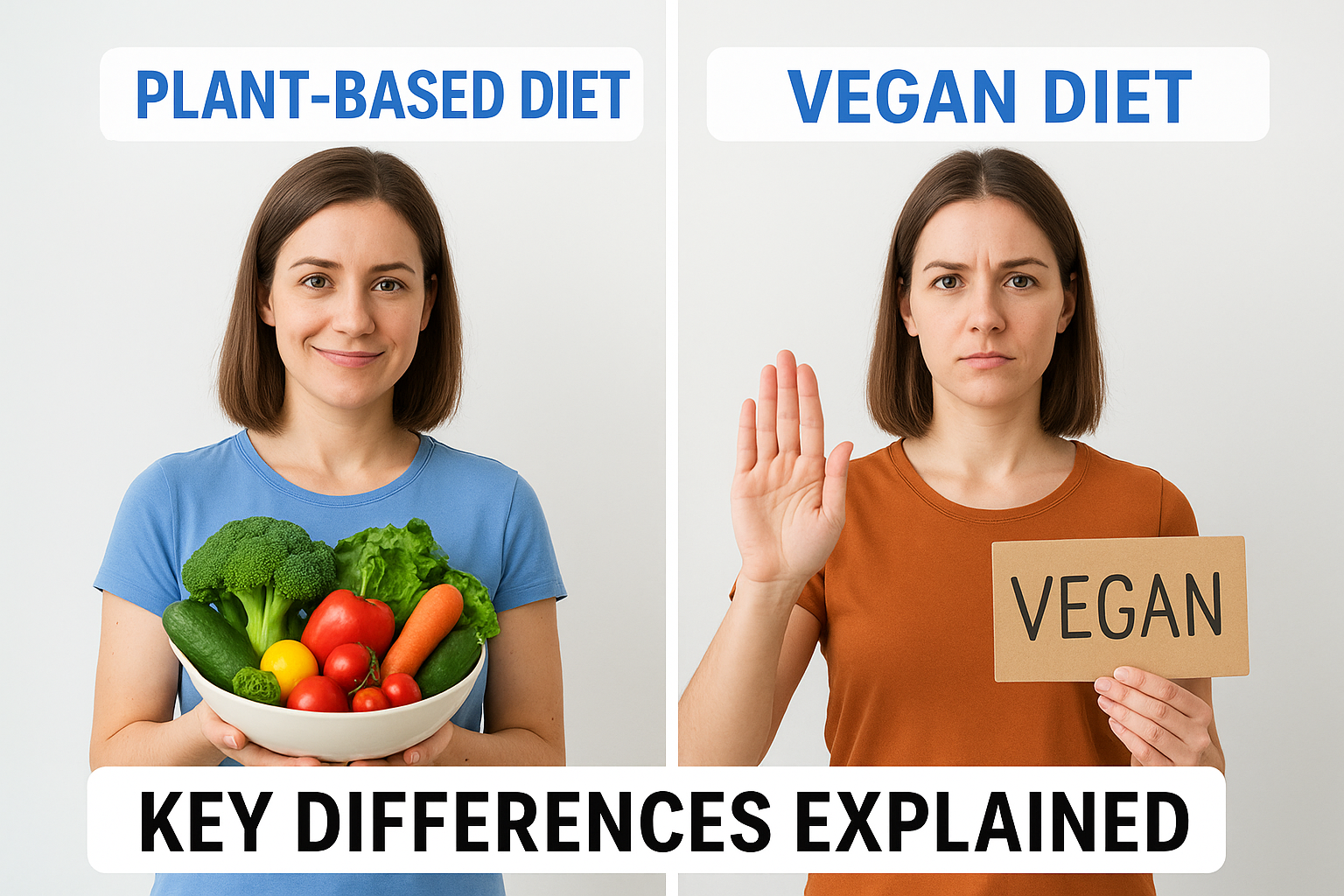
When you compare the plant-based diet vs vegan diet directly, the clearest dividing line isn’t the food itself; it’s the reason behind the choice. People on a plant-based diet focus primarily on personal health outcomes: better blood sugar control, lower cholesterol, more sustained energy. People who identify as vegan extend that commitment well beyond food into clothing, cosmetics, and any product that involves animal exploitation.
Two people can eat an identical plate and belong to entirely different frameworks. One might eat eggs occasionally and still describe their approach as plant-based without any contradiction. The other would consider eggs off-limits based on ethical principles, regardless of any health argument. The food overlaps; the values do not always follow.
What a plant-based diet means in practice
A plant-based diet centers on whole, minimally processed foods that come primarily from plants. Vegetables, fruits, legumes, whole grains, nuts, and seeds make up the core of every meal. The goal is to maximize nutrients from plant sources rather than eliminate all animal products on principle.
Foods you eat and foods you limit
When you follow a plant-based approach, your plate looks heavy on colorful vegetables, beans, lentils, and intact whole grains like oats and brown rice. Animal products are not automatically banned; they’re simply reduced or moved to the background. Many people on this path still eat small amounts of fish, eggs, or dairy when they choose to, without feeling they’ve broken any rule.

- Vegetables (all types, cooked and raw)
- Legumes (lentils, chickpeas, black beans)
- Whole grains (brown rice, oats, quinoa)
- Fruits, nuts, and seeds
- Optional: small amounts of eggs, fish, or dairy
Flexibility is a feature, not a flaw
One reason people choose plant-based eating over a stricter framework is the built-in flexibility. You don’t need to audit every ingredient label or worry about accidental exposure to animal byproducts. The focus stays on what you add to your diet, not what you remove.
When comparing a plant based diet vs vegan diet, the plant-based approach is largely defined by what it includes, while veganism is largely defined by what it excludes.
That mindset shift makes plant-based eating more sustainable for most people, especially those just starting to explore eating more plants who aren’t ready to commit to a more rigid lifestyle change.
What a vegan diet means in practice
A vegan diet eliminates all animal products and byproducts from food entirely. That means no meat, fish, poultry, dairy, eggs, or honey. Unlike the plant-based approach, veganism draws a firm boundary that doesn’t shift based on personal preference or health goals on any given day.
Foods that are off the table entirely
Vegans avoid any food that comes from or is produced by an animal. That includes obvious items like steak and cheese, but also less obvious ones like gelatin (which comes from animal bones), certain wines clarified with egg whites, and some food colorings derived from insects. Reading ingredient labels becomes a regular habit when you follow this approach.

- Meat, poultry, and seafood
- Dairy products (milk, cheese, butter, cream)
- Eggs and egg-derived ingredients
- Honey and bee pollen
- Gelatin and animal-derived food additives
Ethics extend beyond the plate
When you compare a plant based diet vs vegan diet, the most significant distinction surfaces here. Veganism is a lifestyle commitment, not just a dietary framework. Many people who identify as vegan also avoid leather, wool, and cosmetics tested on animals.
Veganism treats the diet as one part of a broader ethical position, while a plant-based diet treats food choices as a standalone health practice.
That broader scope means your grocery shopping, wardrobe choices, and product purchases all factor into the framework, which is a meaningful difference from simply eating more plants for better health.
Key differences at a glance
When you place a plant based diet vs vegan diet side by side, three core distinctions stand out: motivation, flexibility, and scope. These aren’t minor variations in a shared philosophy; they point to fundamentally different relationships with food and everyday choices.
Motivation and scope compared
The driving reason behind each approach shapes everything downstream. A plant-based diet starts with a health goal, so the focus stays on what you eat and how it affects your body. A vegan diet starts with an ethical position, so the scope extends to every product you buy, wear, or use.
Your “why” determines which framework actually fits your life, and forcing the wrong one rarely leads to lasting change.
Here is a direct comparison to make this concrete:
| Factor | Plant-Based Diet | Vegan Diet |
|---|---|---|
| Primary motivation | Health and nutrition | Animal ethics and environment |
| Animal products allowed | Sometimes, in small amounts | Never |
| Lifestyle scope | Food choices only | Food, clothing, cosmetics, and more |
| Label reading intensity | Moderate | High |
| Flexibility | High | Low |
Where the two diets actually overlap
Both approaches prioritize plants as the foundation of eating, and both reduce or eliminate the majority of animal-based foods. If you commit to either path, you will likely see similar results in areas like increased vegetable intake, lower saturated fat consumption, and better overall diet quality. The outcomes often converge even when the motivations diverge.
How to choose and transition smoothly
Deciding between a plant based diet vs vegan diet comes down to one honest question: what is driving your change? If your primary goal is better health, improved energy, or managing a chronic condition, a plant-based approach gives you room to grow without rigid rules. If you feel strongly about animal welfare or environmental impact, veganism aligns your food choices with those values in a concrete, consistent way.
Start with your “why”
Your motivation determines how much structure you actually need. If you choose veganism purely because it sounds stricter or more committed, but you have no ethical connection to it, you will likely struggle to maintain it. Lasting dietary change sticks when it matches your real reasons, not someone else’s framework.
Pick the approach that matches your actual values, and the day-to-day food decisions become much easier to stick with.
Make the shift gradual
Most people do better when they add more plants first rather than cutting everything out at once. Start by building two or three fully plant-centered meals into your week and expand from there. Track how your energy, digestion, and overall satisfaction respond as your plate shifts.
Whether you’re moving toward a plant-based approach or committing fully to veganism, small consistent changes outperform dramatic overnight overhauls. Stocking your kitchen with whole foods like legumes, whole grains, and fresh vegetables before you need them removes the friction that makes new habits fall apart in the first few weeks.

Final takeaway
The plant based diet vs vegan diet debate comes down to a single distinction: health focus versus ethical commitment. A plant-based approach gives you flexibility to center your meals on whole foods while leaving room for occasional animal products. Veganism holds a firm line across food, clothing, and everyday products based on a deeper value system. Neither path is wrong, and both lead to eating significantly more plants than the average American diet includes.
Your best move is to pick the framework that honestly matches your goals and your values, then build from there. Small, consistent changes will always outperform a strict overnight shift that fades after two weeks. If you want practical support along the way, including product recommendations and guidance on whole food choices, explore everything Worganic Foods has to offer and use it as your go-to resource throughout your wellness journey.
Discover more from Woganic Blog
Subscribe to get the latest posts sent to your email.