

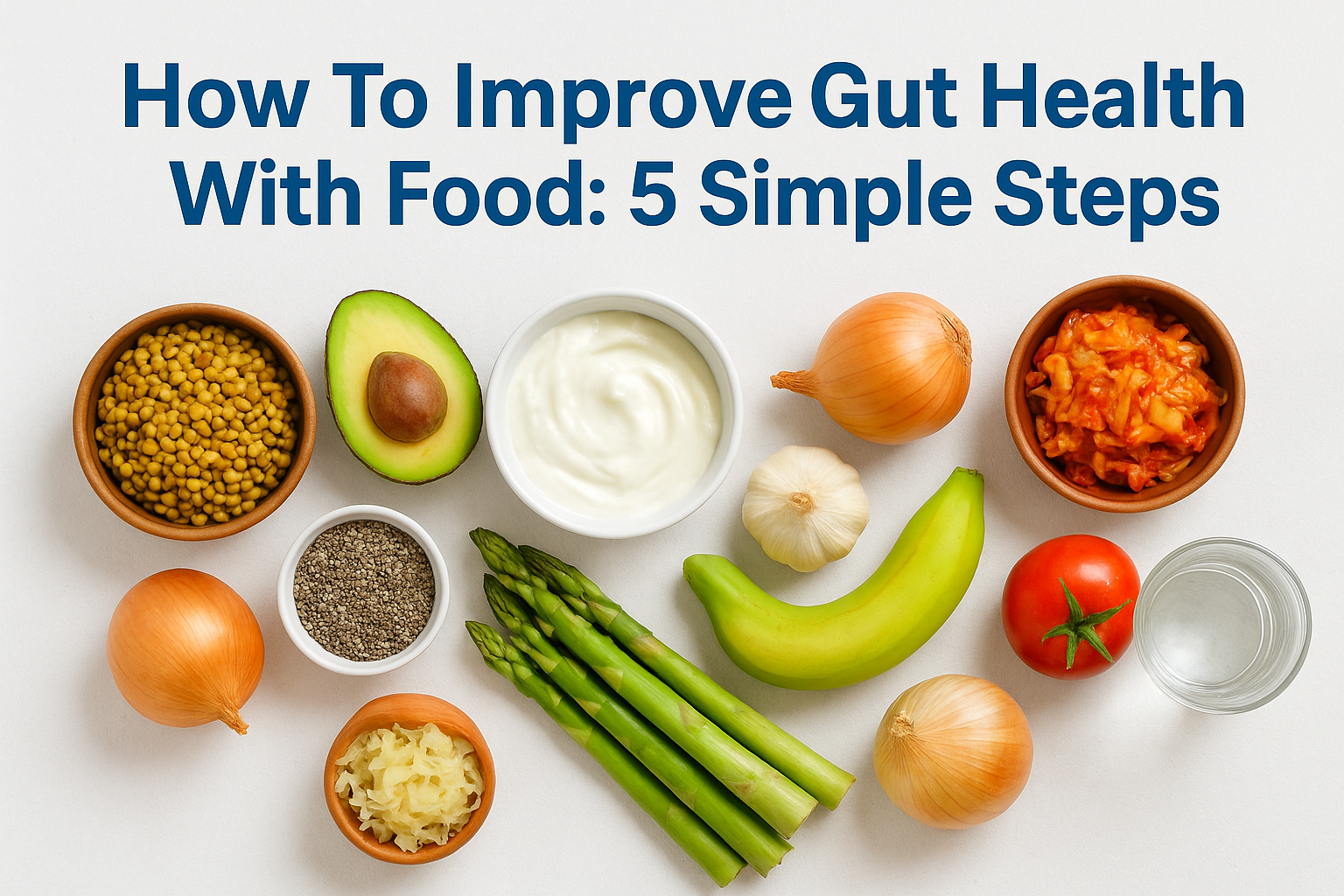
Bloating after meals, sluggish digestion, energy crashes by mid-afternoon. If any of that sounds familiar, your gut is probably trying to tell you something. Learning how to improve gut health with food doesn’t require a cabinet full of supplements or a complicated elimination diet. It starts with what’s already on your plate.
The truth is simple: your digestive system runs on fiber-rich foods and a steady supply of beneficial bacteria from fermented sources. Skip the fad diets and gut-cleanse teas. Real change comes from feeding the trillions of microbes living in your intestines with the right variety of whole foods, day after day.
In this article, we break down five practical steps you can start using today, from choosing the right prebiotic vegetables to adding fermented staples like sauerkraut, kimchi, and kefir into your routine. Each step is grounded in how digestion actually works, not trendy shortcuts. By the end, you’ll have a clear, food-first roadmap for calmer digestion, steadier energy, and a gut that actually works with you instead of against you.
1. Load up on fiber-rich whole foods
Fiber is the single biggest lever you can pull for gut health, and most people fall short of it. The average adult eats around 15 grams of fiber a day, well below the 25 to 38 grams recommended by the Dietary Guidelines for Americans. Closing that gap is where real digestive improvement starts.

Best foods to choose
Reach for a mix of soluble and insoluble fiber rather than one type alone. Both matter, and they work differently once they hit your gut.
| Food | Fiber per serving | Type |
|---|---|---|
| Lentils (1 cup cooked) | 15.6g | Soluble & insoluble |
| Raspberries (1 cup) | 8g | Insoluble |
| Oats (1 cup cooked) | 4g | Soluble |
| Avocado (1 whole) | 10g | Soluble & insoluble |
| Broccoli (1 cup cooked) | 5.1g | Insoluble |
| Chia seeds (1 oz) | 10g | Soluble |
Why it helps your gut
Soluble fiber dissolves into a gel that slows digestion and feeds beneficial bacteria in your colon, while insoluble fiber adds bulk that keeps things moving and prevents constipation. Together, they support regular bowel movements and give your gut microbiome the raw material it needs to produce short-chain fatty acids, which lower inflammation and strengthen your intestinal lining.
A high-fiber plate does more for your gut in one meal than any supplement can.
How to add it to your diet
Small, steady changes beat drastic overhauls, especially since a sudden fiber spike can cause gas and bloating.
- Swap white rice or bread for whole grain versions.
- Add a handful of beans or lentils to soups and salads.
- Keep the skin on apples, potatoes, and cucumbers.
- Snack on nuts, seeds, or fresh fruit instead of packaged snacks.
- Increase fiber gradually over two to three weeks while drinking plenty of water.
2. Add fermented foods for natural probiotics
Fiber feeds the bacteria you already have, but fermented foods actually introduce new, beneficial strains into your gut. This is where live cultures do the heavy lifting, populating your digestive tract with the same organisms found in many probiotic supplements, minus the price tag.

Best foods to choose
Look for products labeled "contains live and active cultures" since heat-treated versions lose most of their probiotic value.
- Plain yogurt or kefir
- Sauerkraut (unpasteurized, refrigerated)
- Kimchi
- Miso
- Tempeh
- Kombucha (unpasteurized, low sugar)
Why it helps your gut
Fermented foods deliver strains like Lactobacillus and Bifidobacterium directly to your intestines, where they help crowd out harmful bacteria and support a more balanced microbiome diversity. Research published by the National Institutes of Health links regular fermented food intake to reduced inflammation markers and improved digestive symptoms.
Fermented foods don’t just support your gut, they restock it.
How to add it to your diet
Start small since a sudden dose of live cultures can cause temporary gas. Add two tablespoons of sauerkraut or kimchi as a side dish, stir kefir into smoothies, or swap your usual snack for a small cup of plain yogurt. Build up gradually until fermented foods appear in at least one meal daily.
3. Feed good bacteria with prebiotic foods
Probiotics get new bacteria into your gut, but prebiotic fiber is what keeps them alive once they’re there. Without a steady food source, even a healthy dose of live cultures fades fast, so this step works hand in hand with the fermented foods from step two.
Best foods to choose
Prebiotics are concentrated in certain plants that humans can’t fully digest but gut bacteria thrive on.
- Garlic and onions
- Leeks
- Asparagus
- Jerusalem artichokes
- Green bananas
- Chicory root
Why it helps your gut
These foods contain compounds like inulin and resistant starch that pass through your small intestine undigested, reaching your colon where bacteria ferment them into short-chain fatty acids. That fermentation process feeds strains like Bifidobacterium directly, strengthening the same microbiome diversity fiber and fermented foods already support.
Prebiotics are the fuel that keeps your probiotics working.
How to add it to your diet
Cook onions and garlic into everyday meals rather than treating them as garnish. Slice leeks into soups, roast asparagus as a side dish, and add a slightly underripe banana to your morning oatmeal. Introduce these slowly if you’re new to them, since inulin-rich foods can cause bloating in larger amounts.
4. Cut back on processed and high-fat foods
Adding good foods only gets you halfway there. If your plate is still loaded with ultra-processed snacks and fried fare, you’re undoing the progress from steps one through three. This step is about subtraction, not addition, and it matters just as much when you’re figuring out how to improve gut health with food.
Best foods to choose
Instead of reaching for packaged convenience foods, choose whole, minimally processed alternatives.
- Home-cooked meals over fast food
- Olive oil instead of fried, breaded dishes
- Fresh cuts of meat instead of processed deli meats
- Sparkling water instead of soda
Why it helps your gut
Diets heavy in emulsifiers, artificial sweeteners, and saturated fat disrupt your gut lining and reduce microbial diversity, according to research summarized by the National Institutes of Health. High-fat, low-fiber eating patterns also feed inflammatory bacterial strains while starving the beneficial ones you’ve been building up.
What you cut from your diet matters as much as what you add.
How to add it to your diet
Just replace one processed meal a day with a simple, home-cooked alternative. Read ingredient labels and skip anything with a long list of additives you don’t recognize.
5. Stay hydrated and mind your trigger foods
All the fiber and fermented foods in the world won’t help much if you’re running low on water. Digestion depends on fluid to move fiber through your gut smoothly, and dehydration is a common, overlooked reason for constipation and sluggish digestion.
Best foods to choose
Water is the obvious pick, but hydration also comes from food itself.
- Cucumber, watermelon, and celery (over 90% water)
- Herbal teas like ginger or peppermint
- Bone broth or vegetable broth
- Plain water, ideally 8 to 10 cups daily
Why it helps your gut
Fiber needs water to do its job. Without enough fluid, soluble fiber can’t form the gel that softens stool, and insoluble fiber turns into a source of blockage instead of relief. Proper hydration also supports the mucus lining of your gut, which protects it from irritation. On top of that, everyone has personal trigger foods, often dairy, gluten, or excess caffeine, that spark bloating or discomfort regardless of how healthy your diet otherwise looks.
Water isn’t a side note in gut health, it’s what makes fiber actually work.
How to add it to your diet
Carry a water bottle and sip throughout the day rather than chugging it all at once. Keep a short food journal for two weeks to spot patterns between specific foods and symptoms, then scale back accordingly.

Small food swaps, better digestion
Gut health doesn’t turn around overnight, but it does turn around. Add more fiber-rich whole foods, bring in fermented staples like kefir or kimchi, feed those bacteria with prebiotics, cut back on ultra-processed meals, and drink enough water to keep everything moving. That’s the whole framework for how to improve gut health with food, and none of it requires supplements or strict rules.
Give it a few weeks. Less bloating, steadier energy, and more regular digestion are usually the first signs your gut is responding. Pick one step from this list and start there instead of trying to overhaul your whole diet at once. Small, consistent swaps beat short bursts of motivation every time.
If you want more practical guidance on building meals around real, organic ingredients, explore our collection of nutrition guides at Worganic Foods for recipes, product picks, and everyday tips that support the changes you’re making here.
Discover more from Woganic Blog
Subscribe to get the latest posts sent to your email.




Leave a Reply
Your email is safe with us.