
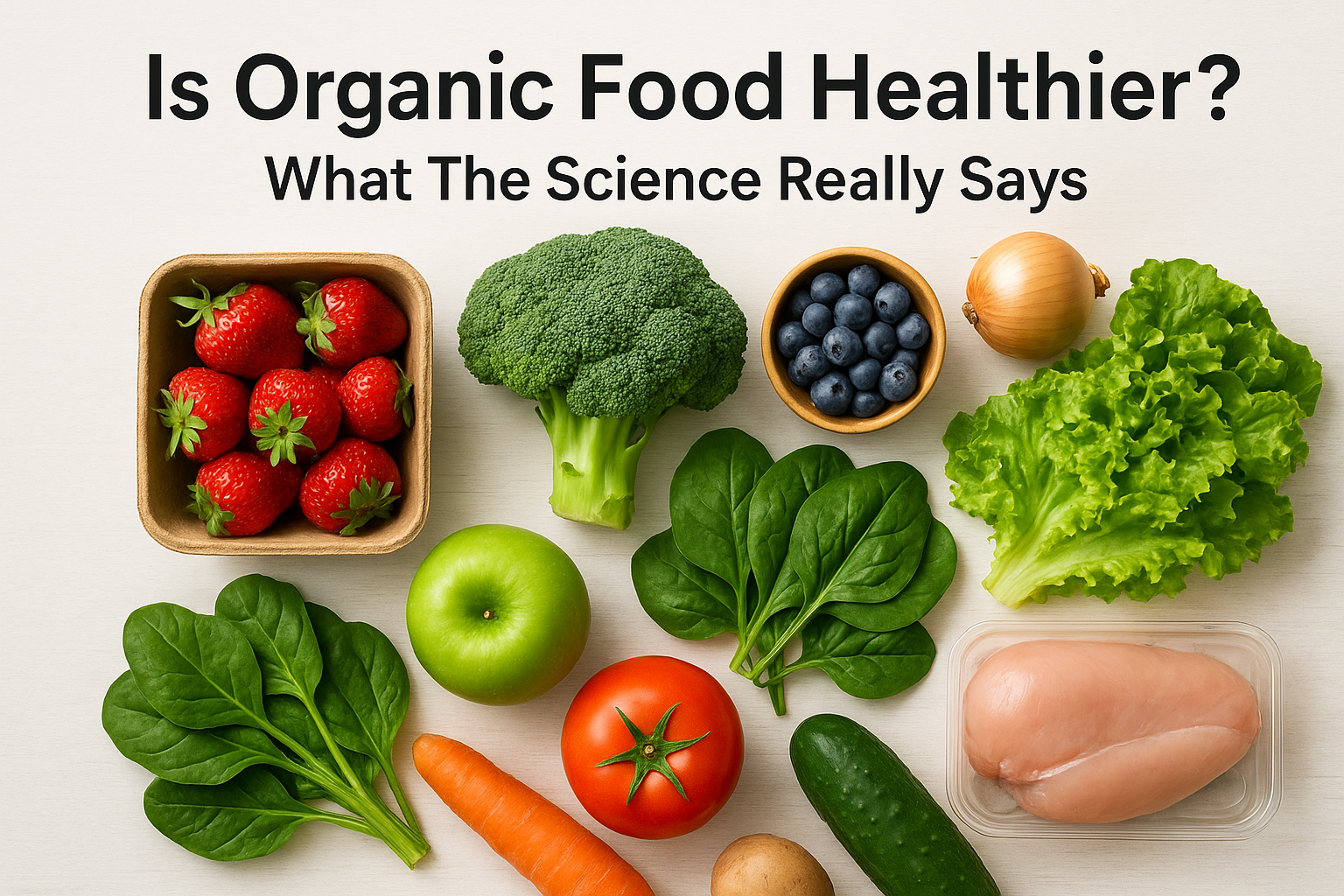
You’ve probably stood in a grocery aisle, staring at two versions of the same apple, one organic, one conventional, and wondered is organic food healthier or just more expensive. It’s a fair question, and you’re far from alone in asking it.
The organic food market has grown into a multi-billion dollar industry, yet confusion around its actual health benefits persists. Some studies point to lower pesticide residues and higher antioxidant levels. Others suggest the nutritional differences are minimal. Sorting fact from marketing spin takes more than a quick headline skim.
At Worganic Foods, we built this blog to help people make informed choices about organic living, not just enthusiastic ones. That means being honest about what the research actually supports and where the gaps still exist. This article breaks down the current science on organic versus conventional foods, covering nutritional content, pesticide exposure, and long-term health outcomes. By the end, you’ll have a clear, evidence-based picture to decide whether organic is worth it for you and your family.
What organic means in the US
Before you can answer whether organic food is healthier, you need to understand what the label actually guarantees. In the United States, the USDA National Organic Program (NOP) sets the legal standards for what can carry an organic label. These rules cover how food is grown, raised, handled, and processed, and they’re enforced through accredited third-party certifiers. Slapping “organic” on a product without going through that certification process is a federal violation, which means the label carries real legal meaning, not just marketing intent.
USDA organic certification levels
Not all organic labels carry the same weight, and that detail matters more than most shoppers realize. The USDA recognizes four distinct labeling tiers, each with different requirements for what share of a product’s ingredients must meet organic standards.

| Label | Requirement |
|---|---|
| 100% Organic | Every ingredient and processing aid is certified organic |
| Organic | At least 95% of ingredients are certified organic |
| Made with Organic… | At least 70% of ingredients are certified organic |
| Specific organic ingredients | Less than 70%; organic ingredients listed only in the ingredient panel |
Only products in the first two tiers can display the USDA Organic seal on their packaging. When you’re comparing products in the store, checking which tier a label belongs to is a fast way to gauge how much of that product actually meets federal organic standards.
The USDA Organic seal means a third-party certifier has verified the product meets federal standards, not just that a brand made a claim on the packaging.
What organic farming actually prohibits
For crops, organic certification bans the use of most synthetic pesticides, synthetic fertilizers, sewage sludge, irradiation, and genetically modified organisms. Farmers must instead rely on approved natural inputs, cover crops, and biological pest management. The complete list of allowed and prohibited substances is maintained under the USDA’s National Organic Program framework.
Livestock and poultry raised under organic standards must have year-round access to the outdoors, cannot receive synthetic growth hormones, and cannot be given routine antibiotic treatments. Their feed must also be certified organic. These rules address both animal welfare and the potential residual effects of those inputs on the food itself. Understanding these baseline production differences is where any honest comparison of organic versus conventional food has to start.
Is organic food more nutritious
This is one of the most common questions people raise when they start examining whether is organic food healthier a real advantage or a marketing story. The honest answer is that it depends on which nutrients you’re measuring and how much clinical weight you assign to the differences the studies find. Research results vary significantly depending on the crop, the region, the soil conditions, and the specific study design.
What the research shows on nutrient levels
A major 2014 meta-analysis published in the British Journal of Nutrition analyzed 343 peer-reviewed studies and found that organic crops contained significantly higher concentrations of certain antioxidants, including polyphenols, compared to conventionally grown crops. The researchers linked this largely to the fact that plants under organic management produce more of their own defensive compounds when they aren’t shielded by synthetic pesticides, a response sometimes called the stress response theory.
Organic crops showed up to 69% higher concentrations of certain antioxidant compounds in the British Journal of Nutrition meta-analysis, though researchers continue to debate whether that difference translates into measurable health outcomes for people eating those foods.
Where the differences are smaller than you’d expect
Not every nutrient category shows a meaningful gap between organic and conventional. Macronutrients like protein, fat, and carbohydrates are virtually identical regardless of how a crop was grown. Vitamin and mineral levels show only modest differences in most studies, and those numbers shift depending on soil quality, crop variety, climate, and time since harvest. Eating more produce overall, whether organic or not, delivers far more measurable health benefit than the nutritional margin between the two production methods.
Pesticides and health: what we know
Pesticide residues are often the first thing people cite when they ask is organic food healthier than conventional produce. The concern makes sense: synthetic pesticides are designed to kill organisms, so it’s reasonable to wonder what repeated low-level exposure does to human health over years of eating. The research here is more nuanced than either side of the debate tends to admit, and understanding what studies actually measured helps you think about this more clearly.
What the data says about residue levels
Studies consistently show that organic produce carries significantly lower pesticide residues than conventionally grown food. A study published in Environmental Health Perspectives found that children who switched to an organic diet saw measurable reductions in urinary pesticide metabolites within just a few days. That finding tells you something real about exposure differences, even if it doesn’t yet tell you everything about what those reductions mean for long-term health outcomes in adults.

Reducing pesticide exposure is a documented and measurable benefit of eating organic produce, but researchers have not yet established what chronic low-dose exposure means for adult health outcomes over decades.
How regulators set pesticide limits
The EPA sets legal tolerances for pesticide residues on conventionally grown food through a process designed to build in safety margins above levels likely to cause harm. The USDA’s Pesticide Data Program monitors residue levels annually and consistently finds that most conventional produce falls well within those legal limits. That doesn’t mean residues are zero, but it does mean the food reaching store shelves has passed regulatory review. Whether those thresholds fully protect sensitive populations like pregnant women and young children is where genuine scientific debate continues, and it’s a reasonable factor to weigh when making purchasing decisions.
Food safety, antibiotics, and hormones
Beyond nutrition and pesticides, antibiotic use and synthetic hormones in conventional livestock production are two of the most common reasons people ask is organic food healthier when it comes to meat and dairy. These are not fringe concerns. Both issues have genuine public health dimensions backed by federal agency attention, which makes them worth understanding clearly before you decide where to spend your food budget.
Antibiotics in livestock production
Conventional livestock operations commonly use antibiotics not just to treat sick animals but to promote faster growth and prevent disease in crowded conditions. This practice contributes to the broader problem of antibiotic-resistant bacteria, which the CDC identifies as one of the most serious public health threats the US faces. Organic certification prohibits routine antibiotic use entirely. Animals that become ill may still receive treatment, but they must then be removed from the organic program. That distinction matters if you’re concerned about contributing to antibiotic resistance through your food choices.
The CDC has linked routine antibiotic use in livestock to the spread of antibiotic-resistant bacteria, a problem that affects human medicine directly.
Hormones in meat and dairy
Synthetic growth hormones like rBGH and rBST are approved for use in conventional dairy cattle in the United States to increase milk production. Organic standards ban their use completely. For beef, the FDA permits several hormones in conventional production, while organic beef must come from animals raised without them. Research on the direct health effects of hormone residues in food is still developing, but choosing organic gives you a clear way to avoid that exposure altogether.
How to decide what to buy organic
Asking is organic food healthier only gets you so far if you can’t actually afford to buy everything organic. Budget is a real constraint for most households, and the good news is that not every food category carries the same risk profile. Being selective about where you spend your organic dollars delivers most of the benefit without requiring you to overhaul your entire grocery bill at once.
The Dirty Dozen and Clean Fifteen
The Environmental Working Group publishes an annual list ranking produce by pesticide residue levels, based on USDA testing data. Their Dirty Dozen identifies the twelve crops that consistently test highest for pesticide residues, while the Clean Fifteen highlights produce that typically shows very low residue levels even when grown conventionally.
Strawberries, spinach, and peaches have appeared near the top of the Dirty Dozen list for multiple consecutive years, making them strong candidates for organic purchase.
Prioritizing organic versions of high-residue crops is one of the most efficient ways to reduce your exposure without overspending. The crops that most consistently appear on that list include strawberries, spinach, peaches, apples, grapes, and bell peppers. Starting with those six gives you meaningful coverage for a fraction of a full organic grocery bill.
When organic matters most for animal products
Meat, dairy, and eggs warrant separate attention because of the antibiotic and hormone concerns covered earlier in this article. Choosing organic dairy and poultry gives you a clear way to avoid those inputs, and the price gap on organic dairy is often smaller than on specialty produce, making it a practical starting point.
Your budget will always shape these decisions, but knowing which categories carry the highest risk lets you make targeted choices rather than defaulting to all-or-nothing thinking.

The practical bottom line
So, is organic food healthier? The science says: yes in some areas and only marginally in others. Organic produce consistently shows lower pesticide residues. Organic meat and dairy avoid synthetic hormones and routine antibiotics. Antioxidant levels are often higher in organic crops. But macronutrient profiles are nearly identical across both production methods, and eating more fruits and vegetables overall matters far more than whether each one carries a USDA seal.
You don’t need to go all-organic overnight to get real benefit from these findings. Targeting high-risk categories like the Dirty Dozen, organic dairy, and poultry gives you the most return on your investment. Start where the evidence is strongest, build from there, and let your budget guide the pace.
Ready to put this into practice? Explore organic food products at Worganic Foods to find options that fit where you are in your wellness journey right now.
Discover more from Woganic Blog
Subscribe to get the latest posts sent to your email.