
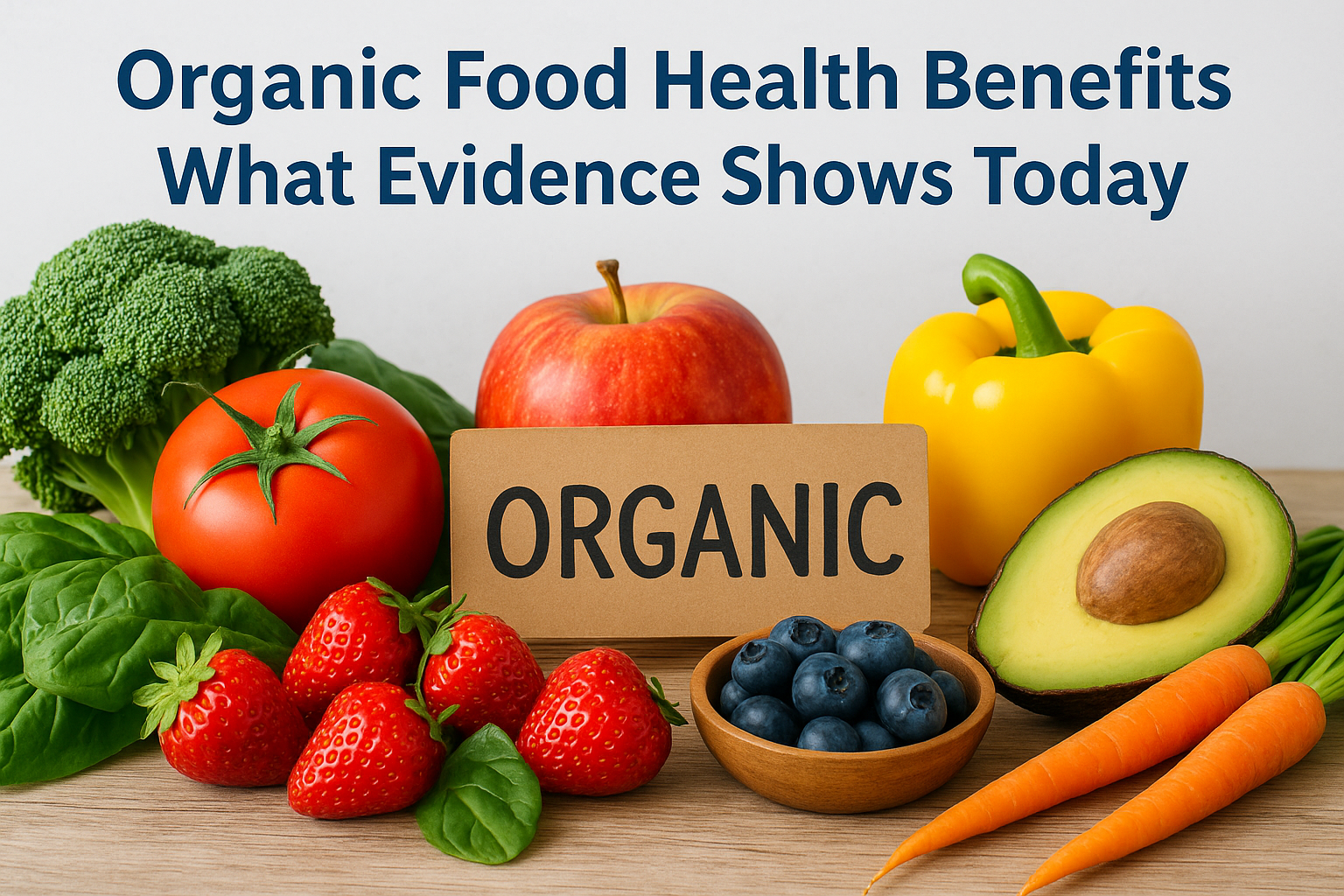
Grocery aisles are full of “organic” labels, and so is the internet, full of claims about what eating organic can and can’t do for your body. Sorting through it all gets exhausting. The real question most people bring to the table is straightforward: are there meaningful organic food health benefits, or is this just a premium price tag on the same nutrition? It’s a fair question, and the research has come a long way in answering it.
Over the past decade, peer-reviewed studies have sharpened our understanding of how organic foods differ from conventionally grown alternatives. We’re not talking about vague wellness promises. We’re talking about measurable differences in pesticide residue levels, antioxidant concentrations, and fatty acid profiles, data points that matter when you’re making decisions about what to feed yourself and your family.
At Worganic Foods, we built this blog because we believe those decisions should be informed by evidence, not hype. We publish research-backed content to help you evaluate organic living on your own terms, whether you’re just starting to explore cleaner eating or you’ve been at it for years. This article breaks down what current science actually shows about the health advantages of choosing organic, where the evidence is strong, where it’s still developing, and what it means for your daily choices. No exaggeration, no overselling, just a clear look at the data.
What organic food means in the United States
In the US, “organic” is a federally regulated term, not a marketing phrase any producer can apply freely. The United States Department of Agriculture (USDA) controls what qualifies through its National Organic Program (NOP), which sets the legal standards that farms and food producers must meet before they can use the certified organic label on their products.
Understanding what the label actually certifies helps you evaluate organic food health benefits with a much clearer, more accurate eye.
The USDA certification tiers
Not all organic labels carry the same weight, and that distinction matters when you’re comparing products at the store. The USDA recognizes four distinct labeling categories based on how much of a product’s content meets organic standards:

| Label | What it means |
|---|---|
| 100% Organic | Every ingredient is certified organic |
| Organic | At least 95% of ingredients are certified organic |
| Made with Organic… | At least 70% of ingredients are certified organic |
| Contains Organic Ingredients | Less than 70% organic; USDA seal not permitted |
These distinctions are meaningful in practice. A product labeled “made with organic ingredients” still contains up to 30% conventional inputs, which may include synthetic additives or conventional crops. The USDA Organic seal on the front of a package signals that the product meets at least the 95% threshold, giving you a reliable shortcut when you’re shopping quickly.
What the certification actually prohibits
Certified organic production bans a specific set of practices and inputs that conventional farming uses routinely. Synthetic pesticides and herbicides are not permitted on organic crops. Growers also cannot apply synthetic fertilizers, sewage sludge, irradiation, or genetically modified organisms (GMOs) at any point in the production process.
For livestock and poultry products, organic certification requires that animals receive 100% organic feed and have access to pasture. Producers cannot use antibiotics or synthetic growth hormones to accelerate growth or manage routine illness. This point carries real weight for anyone paying attention to antibiotic resistance, since conventional livestock operations account for a significant share of antibiotic use in the United States each year.
Third-party certifiers approved by the USDA inspect farms and facilities on a regular basis to verify compliance. No producer self-certifies, which means the organic label carries a level of accountability that most other food marketing terms, including the widely used word “natural,” simply do not have behind them. That regulatory structure is the foundation for any honest conversation about what organic food is, and what it is not.
Why organic food can support health
The connection between organic farming practices and health outcomes starts with what organic production removes from your food supply. When farms eliminate synthetic pesticides and herbicides, the residues that would otherwise accumulate on and inside crops are significantly reduced. That reduction has a direct, measurable impact on what ends up in your body over time, which is why pesticide exposure sits at the center of most research on organic food health benefits.
Reduced exposure to synthetic pesticides
Studies using urine biomarker testing consistently show that people who eat organic food carry lower levels of pesticide metabolites in their bodies compared to those eating conventional diets. The EPA acknowledges that many pesticides are designed to disrupt biological systems in insects and weeds, and ongoing research examines how long-term, low-level exposure affects human health, particularly in children whose developing systems are more vulnerable to chemical interference.
Switching even partially to organic produce can measurably reduce the pesticide load your body processes each week.
Differences in nutrient and compound profiles
Organic crops also tend to produce higher concentrations of certain antioxidants and polyphenols compared to conventionally grown counterparts. Researchers believe this happens because organic plants respond to environmental stressors without chemical protection, which pushes the plant to generate more of its own natural defense compounds. Those same compounds, including flavonoids and phenolic acids, are associated with reduced oxidative stress in human cells.
Animal products from organic farms tell a related story. Grass-fed organic livestock produce milk and meat with higher levels of omega-3 fatty acids compared to conventionally raised animals. Those fatty acid ratios matter for cardiovascular and inflammatory health, making organic animal products a meaningful consideration for your long-term dietary choices.
What the evidence says about health benefits
The research on organic food health benefits is not uniform, but several well-designed studies offer solid ground to stand on. A 2014 meta-analysis published in the British Journal of Nutrition, which reviewed 343 peer-reviewed studies, found that organic crops contained significantly higher concentrations of antioxidants, lower cadmium levels, and roughly four times lower pesticide residue than conventional crops. That scale of analysis gives the findings real weight.
Antioxidant levels in organic crops were on average 19 to 69% higher than in conventionally grown equivalents, according to that same meta-analysis.
What long-term population studies show
Researchers have also tracked real dietary patterns across large population groups to measure health outcomes over time. A 2018 French cohort study published in JAMA Internal Medicine followed nearly 70,000 adults and found that those who ate organic food most frequently had a significantly lower incidence of certain cancers, including postmenopausal breast cancer and non-Hodgkin lymphoma. The researchers controlled for lifestyle factors, which adds credibility to the association.
Those findings do not prove that organic food alone prevents disease, but they support the argument that reducing pesticide exposure through diet produces measurable differences in health outcomes at the population level. For you as a consumer, the practical implication is that consistent organic choices, even selective ones, likely contribute to lower cumulative chemical exposure over your lifetime.
What remains under active research
Scientists continue to examine whether nutrient differences between organic and conventional foods translate into clinical health improvements in controlled trial settings. Some results have been mixed, partly because diet studies are difficult to isolate from other lifestyle variables. Still, no major peer-reviewed study has found organic food to carry health risks, which keeps the overall balance of evidence pointing clearly in one direction.
Who may benefit most from choosing organic
Organic food health benefits apply broadly, but certain groups carry a stronger biological case for prioritizing organic purchases. Understanding which situations involve the highest risk from pesticide exposure helps you decide where organic choices matter most for your specific household.
Children and pregnant women
Children are not simply small adults when it comes to chemical exposure. Their organs are still developing, their body weight is lower, and they consume more food relative to their size, which means pesticide residues concentrate at higher levels per pound of body weight compared to adults. The National Institutes of Health has funded research examining how early-life pesticide exposure correlates with neurodevelopmental outcomes, and that body of work consistently supports extra caution during childhood.
Prioritizing organic produce for children, especially high-exposure items like apples, strawberries, and spinach, can meaningfully reduce their cumulative pesticide load.
Pregnant women face a related concern. Fetal development during the first and second trimesters is particularly sensitive to chemical interference, and many synthetic pesticides cross the placental barrier. Choosing organic during pregnancy is one of the most concrete dietary adjustments you can make to reduce that exposure window before your child is even born.
People with chronic health concerns
People managing conditions linked to inflammation or immune dysfunction have practical reasons to reduce their chemical burden through food. Organic animal products, with their stronger omega-3 to omega-6 ratios, are especially relevant for anyone monitoring cardiovascular health or inflammatory markers. Conventional produce is not dangerous in absolute terms, but for someone already managing a chronic condition, removing an unnecessary variable from their diet makes straightforward sense. Your physician or registered dietitian can help you weigh organic choices against your specific health picture and treatment plan.
How to decide what to buy organic on a budget
You do not need to replace every item in your grocery cart with organic versions to capture meaningful organic food health benefits. A targeted approach, focused on the foods that carry the highest pesticide residue levels when grown conventionally, lets you reduce your chemical exposure substantially without stretching your budget past its limit. Knowing which purchases matter most is the most practical skill you can build as an organic shopper.
Start with high-residue produce
The USDA Pesticide Data Program tests thousands of food samples each year and consistently finds that certain fruits and vegetables carry far higher pesticide residues than others. Strawberries, spinach, peaches, apples, grapes, and bell peppers regularly appear at the top of those lists. Buying organic versions of these specific items first delivers the largest reduction in pesticide exposure per dollar you spend.

Prioritizing organic for the produce you eat most frequently each week will have a greater impact on your pesticide load than buying organic items you consume rarely.
Some crops carry very low residue levels even when grown conventionally, because of their thick skins or low pesticide absorption rates. Avocados, onions, sweet corn, pineapples, and cabbage fall consistently into this lower-risk group. You can buy these conventionally with confidence and redirect those savings toward higher-priority organic items.
Think about frequency and portion size
How often you eat a food matters as much as its residue profile. If your household eats strawberries or spinach daily, switching those to organic carries far more weight than switching a food you purchase only a few times a year. Build your organic priority list around your actual consumption habits, not a generic ranking, and you will get the most meaningful reduction in cumulative exposure with the budget you have available.

Key takeaways for everyday shopping
The evidence behind organic food health benefits is real and specific enough to guide practical decisions. You don’t need to overhaul your entire diet at once to make meaningful progress. Reduced pesticide exposure, stronger antioxidant profiles in produce, and better fatty acid ratios in animal products are the three areas where the science consistently points toward organic choices producing measurable differences over time.
Your most effective move is to focus on the foods your household eats most frequently and the items that carry the highest residue levels when grown conventionally. Children, pregnant women, and anyone managing chronic health conditions have the clearest reasons to prioritize organic, but the advantages extend to anyone eating these foods regularly. Start with one or two targeted swaps, track your spending, and build from there as your budget allows.
Explore organic products and wellness resources at Worganic Foods to find practical options that fit your health goals and your budget.
Discover more from Woganic Blog
Subscribe to get the latest posts sent to your email.