
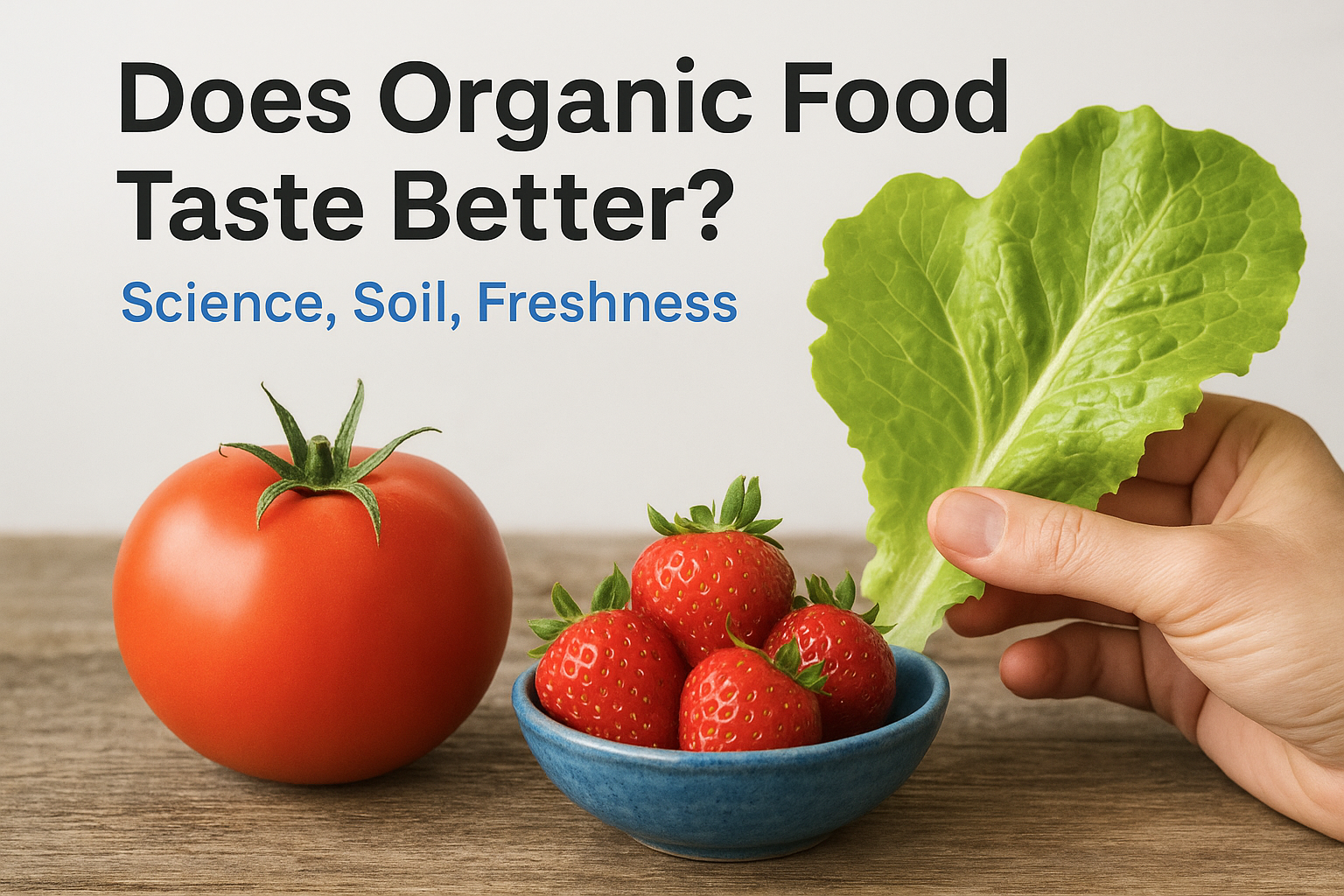
You’ve probably stood in a grocery aisle, held an organic tomato in one hand and a conventional one in the other, and wondered: does organic food taste better, or am I just paying more for a label? It’s a fair question, and one that gets surprisingly complicated once you move past personal preference and start looking at actual data.
The answer isn’t a simple yes or no. Flavor is shaped by measurable factors like soil composition, harvest timing, and how far a piece of fruit traveled before it hit the shelf. Some of these factors consistently favor organic growing methods. Others have nothing to do with the organic label at all. At Worganic Foods, we’ve spent years sorting through the research and firsthand experience to help our readers make informed choices about what they eat and why.
This article breaks down what science actually says about organic flavor, which growing practices matter most for taste, and where marketing claims outpace the evidence. By the end, you’ll have a clear, honest framework for deciding whether organic is worth it, based on facts, not hype.
Why this question is harder than it sounds
When most people ask does organic food taste better, they expect a simple answer. The reality is that taste perception involves multiple overlapping variables that even food scientists wrestle with, including soil chemistry, harvest timing, storage duration, ripeness at the point of picking, and individual biology. None of those variables are captured in a certification label, which is what makes this question trickier than it first appears.
Taste is personal, but flavor has measurable drivers
Your taste buds respond to specific chemical compounds in food, primarily sugars, acids, volatile aromatics, and bitter phenolic compounds. These compounds exist in measurable concentrations and researchers can compare them between organic and conventional samples in a lab. But what you experience when you bite into a peach depends on more than raw chemistry. Past experiences, expectations, and even your hunger level all influence how your brain interprets the same bite. Food researchers call this the "halo effect," where a positive label like "organic" primes your brain to rate the product higher before you’ve even finished chewing.
Expectation shapes perception so strongly that blind taste tests regularly produce different results from labeled ones, which is exactly why the research on this topic stays genuinely mixed.
The organic label doesn’t tell you everything
Organic certification tells you how a crop was grown, specifically which synthetic pesticides and fertilizers were avoided. It says nothing about when the food was harvested, how far it traveled, or what plant variety the farmer chose. A conventional tomato grown in rich local soil and sold within two days of picking will almost always taste better than an organic tomato grown in depleted soil and shipped across the country for a week. Variety selection matters enormously here. Farmers who prioritize yield over flavor, organic or not, consistently grow food that tastes flat.
Your results also depend heavily on which food category you’re evaluating. Flavor differences between organic and conventional growing methods tend to show up most clearly in thin-skinned produce like strawberries, tomatoes, and leafy greens. You’ll notice far less difference in thick-skinned fruits or in heavily processed products where the organic ingredient is just one component among many.
What the science says about taste tests
Researchers have run controlled taste tests on this question for decades, and the results are genuinely mixed. Some studies find measurable flavor advantages in organic produce, while others find no significant difference at all. The most honest summary is that organic sometimes wins, but not consistently across all foods or growing conditions.

The research that favors organic
A widely cited review published in the British Journal of Nutrition analyzed 343 peer-reviewed studies and found that organic crops contained significantly higher concentrations of antioxidants and polyphenols compared to conventional crops. These compounds contribute directly to the complex, slightly bitter, or rich flavors you notice in produce like berries and dark leafy greens. Higher polyphenol levels don’t automatically mean better taste for every palate, but they do indicate more complex chemical profiles that many people perceive as deeper flavor.
When plants grow without heavy synthetic nitrogen fertilizers, they produce more secondary metabolites like polyphenols as a natural stress response, which builds flavor complexity from the inside out.
Where the research falls short
Blind taste test studies show far less consistent results. When you can’t see a label, your preference for organic drops considerably. Research published in the journal Appetite found that labeling significantly influenced taste ratings, with the same food scoring higher when marked organic.
So when you ask does organic food taste better, the honest answer is that the chemistry sometimes supports it, but blind perception studies don’t back it up reliably. What you know about your food genuinely changes how it tastes.
What actually drives flavor in produce and meat
Before you can fairly answer whether does organic food taste better in your experience, you need to understand what actually creates flavor. The label on the packaging is secondary. Soil quality, plant stress, and time between harvest and consumption are the three forces that determine whether your food tastes vibrant or flat.
Soil health and plant stress
Mineral-rich soil produces food with more complex flavor compounds. When a plant absorbs a broad spectrum of minerals through healthy soil biology, it builds denser cell walls and higher concentrations of sugars and aromatics. Conventional farming that relies heavily on synthetic nitrogen fertilizers pushes rapid plant growth, which dilutes these compounds across more water weight. The result is larger produce that tastes milder.

Plants under moderate stress, from competition for nutrients or limited irrigation, redirect energy into producing the secondary metabolites that give food its depth of flavor.
Soil microbiome diversity also plays a direct role. Mycorrhizal fungi networks in healthy soil transfer trace minerals and phosphorus to plant roots more efficiently than synthetic fertilizers can replicate. Organic farming practices tend to preserve these networks, which is one legitimate reason organic produce from well-managed farms often scores higher in flavor tests.
Time from field to fork
Freshness matters more than any certification. Enzymatic and aromatic compounds begin breaking down within hours of harvest. Meat develops its full flavor profile through proper aging, not through what the animal was fed alone. Your best move is sourcing food that traveled less distance, regardless of whether the label says organic.
When organic can taste better in real life
The honest answer to does organic food taste better lands somewhere between "it depends" and "yes, under specific conditions." Organic methods create the right environment for better flavor development, but only when the farm also prioritizes soil health and sells food close to harvest. Not every organic product earns a flavor advantage, but several categories give you a real return on the premium you pay.
Strawberries, tomatoes, and thin-skinned produce
These crops respond most dramatically to organic growing practices. Conventional strawberries are often bred for shelf life and size, which means less sugar concentration and weaker aroma. Organic varieties, especially from local farms, tend to be smaller, softer, and significantly more aromatic because the focus shifts toward flavor and soil nutrition rather than durability during long shipping.
If you want to run your own test, start with strawberries from a local farm stand and compare them side by side with a conventional supermarket option.
Pasture-raised meat and dairy
Organic certification in meat and dairy requires access to pasture, which directly changes the fat composition and flavor profile of the final product. Grass-fed beef contains higher levels of omega-3 fatty acids and conjugated linoleic acid, which produce a richer, slightly more complex taste compared to grain-finished conventional beef. Organic whole milk from pasture-raised cows also consistently scores higher in consumer taste panels, largely because the fat structure carries more varied flavor compounds from a diverse grass diet.
How to shop for better-tasting organic or not
The real answer to does organic food taste better lives at the store level, not in a general rule. Your shopping habits and the specific choices you make at the point of purchase determine whether you actually experience a flavor difference. Certification is one signal among several, and often not the most important one.
Prioritize freshness and source over the label
Local and seasonal produce almost always outperforms imported organic options on flavor, because the gap between harvest and your kitchen is measured in hours rather than weeks. When you can talk to a farmer directly at a market, ask about harvest timing and soil practices, since that conversation tells you more than any label.
A locally grown conventional strawberry picked two days ago will taste better than an organic one that traveled 1,500 miles over seven days.
Farmers market vendors who grow without synthetic pesticides often skip formal organic certification because the process is expensive and time-consuming. These growers frequently produce the best-tasting food available, certified or not.
The categories worth the organic premium
Not every food category rewards the extra cost equally. Focus your organic budget on thin-skinned produce like strawberries, spinach, and peaches, where flavor differences are most noticeable and pesticide residue exposure matters most. For thick-skinned produce like avocados or pineapples, conventional options perform comparably in both taste and safety, so you can save money there without giving anything up at the table.

Quick takeaway
The question of does organic food taste better doesn’t have a universal answer, but the evidence points to a clear pattern: soil health, freshness, and variety selection matter far more than the certification label on its own. Organic growing methods create conditions that support richer flavor chemistry, especially through reduced synthetic fertilizers and preserved soil biology. But a poorly managed organic farm or a long supply chain can erase that advantage entirely.
Your best results come from prioritizing local and seasonal sources first, then using the organic label as a secondary filter for thin-skinned produce where it makes the biggest difference. Start with strawberries or tomatoes from a nearby farm stand and run your own comparison. You’ll notice a difference that no study can fully capture for your specific palate. For more guidance on choosing food that’s both flavorful and genuinely good for you, explore what we cover at Worganic Foods.
Discover more from Woganic Blog
Subscribe to get the latest posts sent to your email.