

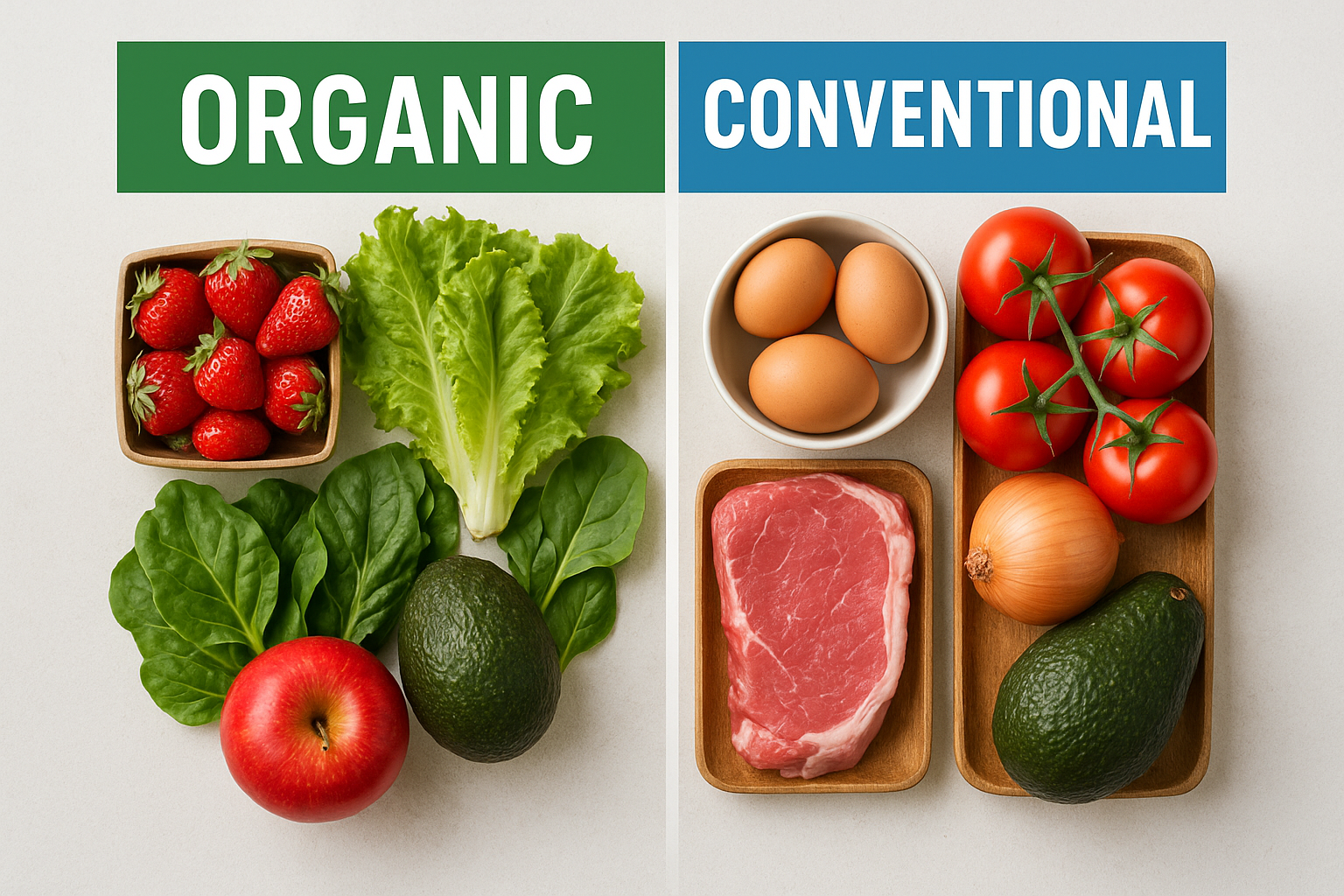
You’ve probably stood in a grocery aisle, staring at two nearly identical apples, one labeled organic, the other not, and wondered whether the price difference actually means anything. The debate around organic food vs conventional food isn’t new, but it’s grown louder as more studies emerge and more people question what they’re putting on their plates.
The truth is, there are real, measurable differences between these two categories, in how the food is grown, what’s sprayed on it, what ends up in your body, and what it costs you at checkout. Some of those differences matter more than others, and separating fact from marketing takes a closer look at the evidence.
That’s exactly what we do here at Worganic Foods. We dig into the research so you can make informed choices about organic living without the guesswork. In this article, we’ll break down the nutritional, safety, environmental, and cost differences between organic and conventional food, and help you decide where your money is best spent.
Why the organic vs conventional difference matters
The choice between organic food vs conventional food goes beyond a price tag. What you eat directly affects your nutrient intake, pesticide exposure, and long-term health outcomes, and understanding the real differences gives you the power to make choices that align with your health goals rather than defaulting to whatever’s cheapest on the shelf.
What’s at stake for your health
Research has consistently linked chronic pesticide exposure to a range of health concerns, including hormonal disruption, neurological effects, and developmental problems in children. The U.S. food supply is monitored, but residues still show up on produce even after washing, and children, pregnant women, and people with compromised immune systems carry the highest risk from sustained low-level exposure to these compounds over time.
The gap between organic and conventional isn’t just about what’s added to your food. It’s also about what’s deliberately kept out.
Your body also responds differently depending on the nutrient density and overall quality of the food you consume. Some studies suggest organic crops contain meaningfully higher levels of certain antioxidants and omega-3 fatty acids compared to conventionally grown alternatives, which means the food you choose can quietly influence how your body functions over years of consistent eating patterns.
Why the food system choice affects more than your plate
Conventional farming practices rely heavily on synthetic fertilizers, herbicides, and pesticides to maximize yield and extend shelf life at scale. These inputs increase production efficiently, but they also degrade soil microbial health, contaminate local water supplies, and reduce biodiversity over time, creating downstream consequences that extend far beyond your grocery cart.
Organic farming operates within stricter guidelines established by the USDA National Organic Program, which prohibits most synthetic chemicals and requires practices that actively support ecological balance. When you buy organic, you direct your purchasing power toward a farming model that prioritizes long-term land health and environmental sustainability over short-term productivity gains, and that distinction compounds significantly at scale.
Both individual health and broader environmental impact sit at the center of this conversation. Your buying habits, when multiplied across millions of households, send a clear signal about which kind of food system you want to see more of, and that signal shapes what farmers grow next season.
How organic and conventional farming differ
The gap between organic food vs conventional food starts at the farm level, long before anything reaches your grocery store. Understanding how each system operates helps you see why the end product can differ in chemical content, nutrient profile, and environmental footprint.
What organic certification actually requires
USDA Organic certification sets strict, legally enforceable standards that farmers must meet and maintain before they can put that label on their product. Certified organic farms must avoid synthetic pesticides, synthetic fertilizers, genetically modified organisms, and most synthetic additives throughout every stage of the growing process.

Soil health drives the entire organic system. Farmers build fertility through compost, crop rotation, and cover crops rather than chemical inputs. These practices support diverse soil microbiomes, which produce crops with stronger natural defenses and, in many cases, higher concentrations of beneficial plant compounds.
Organic certification isn’t just a marketing label. It’s a documented, inspected farming system with enforceable federal standards behind it.
How conventional farming operates
Conventional farming prioritizes yield and efficiency, using synthetic nitrogen fertilizers, herbicides, and pesticides to produce more food per acre at lower cost. That approach has fed billions of people and kept grocery prices accessible across decades.
Your concern with conventional produce is that chemical residues can remain even after washing, and repeated synthetic fertilizer use degrades soil structure over time. Conventional livestock operations also routinely use antibiotics and synthetic growth hormones, both of which are prohibited under organic standards and raise separate questions about long-term exposure risks.
Nutrition: what studies actually show
The nutritional debate in organic food vs conventional food has generated decades of research, and the results are more nuanced than either side tends to admit. Studies do show measurable differences in specific nutrients, but those differences aren’t uniform across all food categories or all farming conditions.
Where organic pulls ahead
A landmark meta-analysis published through the British Journal of Nutrition reviewed 343 peer-reviewed studies and found that organic crops contained significantly higher concentrations of antioxidants, including polyphenols and flavonoids, compared to conventionally grown counterparts. Those compounds matter because your body uses them to fight oxidative stress and reduce inflammation over time. The same analysis found organic dairy and meat products carried roughly 50% more omega-3 fatty acids than conventional equivalents, a difference driven by pasture-based feeding practices rather than synthetic inputs.
The nutrient differences in organic food are real, but they’re most pronounced in specific categories like berries, leafy greens, and dairy rather than across the board.
Where the gap narrows
Not every crop shows a dramatic nutritional difference, and the gap often depends on soil quality, region, and how recently the food was harvested rather than simply on the farming method. Staple crops like rice and potatoes show smaller compositional differences between organic and conventional versions, so prioritizing organic for nutrient-dense foods like spinach, strawberries, and whole milk delivers more return than blanket organic purchasing across every category. Your specific dietary priorities should guide where you invest in organic.
Safety: pesticides, antibiotics, and contamination
Safety is one of the most significant dimensions of the organic food vs conventional food debate, and the evidence here is harder to dismiss than in the nutrition conversation. Conventional produce consistently tests positive for multiple pesticide residues, and even when individual residues fall within legal limits, the cumulative effect of consuming several compounds simultaneously remains poorly understood and largely unregulated by current food safety standards.
What pesticide residues mean for your body
The Environmental Working Group publishes an annual Dirty Dozen list identifying which conventional produce carries the highest pesticide loads, and crops like strawberries, spinach, and bell peppers reliably top it year after year. Switching to organic versions of those specific items reduces your pesticide exposure more efficiently than purchasing everything organic across your entire cart.

Washing produce reduces surface residues but does not eliminate pesticides that have been absorbed into the flesh of the crop during growing.
Studies from the National Institutes of Health have linked chronic low-level pesticide exposure to increased risk of certain cancers, endocrine disruption, and neurological effects, particularly in children whose developing systems process these compounds differently than adults.
Antibiotics and hormones in conventional animal products
Conventional livestock operations routinely administer low-dose antibiotics to accelerate growth and prevent disease in crowded conditions, a practice that directly contributes to antibiotic-resistant bacteria. Your risk extends beyond the food itself; it affects whether the antibiotics you need medically will remain effective over time.
Organic standards prohibit both synthetic growth hormones and routine antibiotic use in livestock, giving organic meat, poultry, and dairy a measurably cleaner safety profile when contamination and long-term exposure are your primary concerns.
Cost and how to decide what to buy organic
Organic food typically costs 20 to 100% more than its conventional counterpart, and that gap adds up quickly across a full shopping cart. The higher price reflects real costs: stricter farming standards, lower yields, and more labor-intensive growing practices that conventional agriculture sidesteps through synthetic inputs. Knowing where that premium delivers the most value helps you spend wisely rather than paying more for everything without a clear reason.
The real price gap between organic and conventional
Organic produce, dairy, and meat carry the highest premiums at most grocery stores, while processed organic products often show a smaller price difference once you compare labels. Your budget stretches further when you focus on fresh whole foods where the farming method directly affects what ends up in your body, rather than paying extra for organic crackers or packaged snacks where the real-world impact is minimal.
Prioritizing organic for the highest-pesticide crops gives you the most safety benefit per dollar spent, without requiring a full overhaul of your grocery budget.
A smarter way to shop organic on a budget
In the organic food vs conventional food debate, the most practical approach isn’t all-or-nothing. Research consistently identifies specific crops where switching to organic delivers measurable reductions in pesticide exposure and chemical residue. Use this framework to guide your choices:
- Strawberries, spinach, and bell peppers: buy organic; these carry the heaviest pesticide loads
- Avocados, onions, and pineapples: conventional is acceptable; thick skins block most residues
- Dairy and meat: organic matters here for antibiotic and hormone avoidance
- Frozen organic produce: often cheaper than fresh organic and nutritionally comparable

Making the choice that fits
The organic food vs conventional food decision doesn’t have a single right answer for every household, but the evidence gives you a clear enough picture to act on. Focus your organic spending on high-pesticide produce, dairy, and meat, where the research most consistently shows meaningful differences in safety and nutrient quality. For lower-risk items like avocados and onions, conventional options remain a reasonable choice without compromising your overall health goals.
Your food choices reflect your priorities and your budget, not a grading system you either pass or fail. Start with the swaps that deliver the most documented benefit, build the habit gradually, and recognize that small, consistent changes in what you eat compound in meaningful ways over months and years. Ready to take the next step? Explore organic foods and wellness resources to find products and guidance that fit your stage of the wellness journey.
Discover more from Woganic Blog
Subscribe to get the latest posts sent to your email.




Leave a Reply
Your email is safe with us.