
A plant-based diet centers on foods derived from plants, fruits, vegetables, grains, legumes, nuts, and seeds, while minimizing or eliminating animal products. It sounds simple enough, but the details matter. What counts as “plant-based”? Can you still eat eggs or dairy? Is it the same as going vegan? These are the questions that trip people up before they even start.
The good news: a plant-based diet is more flexible than most people assume, and the health benefits are well-documented. Research consistently links plant-heavy eating patterns to lower risks of heart disease, type 2 diabetes, and certain cancers. Beyond personal health, choosing plant-based foods supports more sustainable food systems, something we care deeply about here at Worganic Foods.
As a resource built around organic nutrition and natural living, we created this guide to give you a clear, practical understanding of plant-based eating. Below, you’ll find what a plant-based diet actually includes, the specific health benefits backed by research, foods to focus on (and which ones to limit), and meal ideas to help you get started, whether you’re going fully plant-based or just shifting in that direction.
Why plant-based eating matters
Plant-based eating has moved well beyond a niche lifestyle choice. Rates of chronic disease, including heart disease, obesity, and type 2 diabetes, have risen sharply over the past several decades, and researchers consistently point to diet as one of the biggest contributing factors. When you look at what is a plant based diet at its core, you see an eating pattern built around foods that are naturally high in fiber, antioxidants, and phytonutrients, the exact nutrients most people in the United States are not getting enough of on a daily basis.
A diet built on whole plant foods is one of the most well-supported tools in preventive health, backed by decades of peer-reviewed research across multiple countries and populations.
The health burden of modern eating
Most Americans eat far more processed foods, saturated fats, and added sugars than health guidelines recommend. The Standard American Diet is notably low in vegetables, legumes, and whole grains, all of which form the foundation of plant-based eating. When you shift even a portion of your meals toward plant-based options, you begin to change the balance of nutrients your body receives every day.
Research from institutions like the National Institutes of Health links diets high in plant foods to reduced inflammation, better blood sugar regulation, and lower LDL cholesterol. These are not minor improvements. They represent meaningful, measurable changes to how your body functions over time, and they matter regardless of whether you go fully plant-based or simply add more plants to your existing meals.
The environmental argument
Food production is one of the largest contributors to greenhouse gas emissions globally. Animal agriculture, in particular, requires significantly more land, water, and energy per calorie produced compared to growing crops directly. When you choose plant-based foods more often, you reduce your personal demand on natural resources.
This connection between what you eat and how food systems affect the planet is a significant reason why plant-based diets have gained serious attention well beyond the health community. Environmental scientists, public health researchers, and agricultural economists all point to plant-heavy diets as part of the path toward more sustainable food production. For people who care about organic and sustainable living, the environmental case for eating more plants reinforces the health case in a meaningful way.
Why it matters at a personal level
Beyond population-level data, the reason plant-based eating matters is deeply practical. Your energy levels, digestion, weight management, and long-term disease risk are all connected to what you eat consistently over months and years. Small shifts accumulate into real outcomes. You do not need to overhaul your entire diet overnight to start seeing benefits.
Choosing plant-based foods also tends to mean eating whole, minimally processed ingredients, which reduces your reliance on packaged products loaded with additives and preservatives. For anyone building healthier habits around organic and natural foods, a plant-based approach offers a clear, research-supported direction. It is not about eating perfectly every single day. It is about making more of your meals count, by centering them around foods that your body is well-equipped to use.
Plant-based diet vs vegan and vegetarian
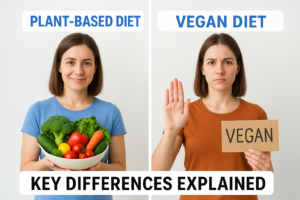
These three terms often get used interchangeably, but they describe meaningfully different approaches to eating. When you ask what is a plant based diet compared to veganism or vegetarianism, the clearest distinction comes down to rules versus priorities. Veganism and vegetarianism operate on defined restrictions. A plant-based diet operates on intention.

What makes a vegan diet different
Veganism is a strict elimination diet. No animal products of any kind are permitted, which includes meat, poultry, fish, dairy, eggs, and often honey. For many people who identify as vegan, the motivation extends beyond food into a broader ethical framework that avoids animal exploitation across all areas of life, including clothing and personal care products.
The core difference between plant-based and vegan is that plant-based describes a dietary pattern, while veganism is often a broader ethical commitment.
From a nutritional standpoint, a well-planned vegan diet and a whole-food plant-based diet can look nearly identical. The difference is how strictly the rules apply and whether occasional exceptions are treated as failures or simply as deviations from a general preference.
Where vegetarian fits in
Vegetarianism sits between omnivorous eating and veganism. Most vegetarians avoid meat and poultry but continue eating dairy and eggs. Some include fish, which makes them pescatarian rather than strictly vegetarian. The motivations vary widely, from health and animal welfare to religious practice and environmental concern.
A plant-based diet overlaps significantly with vegetarianism, but the emphasis on whole, minimally processed foods is what sets it apart. You can be vegetarian and still eat heavily processed foods, fast food alternatives, or refined carbohydrates. A plant-based approach encourages you to go further by building meals around nutrient-dense, recognizable ingredients.
The flexibility that sets plant-based apart
Plant-based eating does not require a label. You set the degree of commitment that fits your life, whether that means going fully plant-based, eating plant-based five days a week, or simply making plants the largest portion of every meal. This flexibility is one of the reasons plant-based diets attract people who find strict vegan or vegetarian rules difficult to maintain long term.
Many people find that starting with a flexible plant-based approach makes the transition easier and more sustainable, without the pressure of defining themselves against a rigid set of restrictions.
What you can eat on a plant-based diet
When people ask what is a plant based diet in terms of actual food choices, the answer is broader than most expect. Whole plant foods form the foundation, and the variety available to you is substantial. Rather than thinking about what you are giving up, it helps to focus on the wide range of foods that naturally fit within this eating pattern every single day.
The more variety you build into your plant-based meals, the easier it becomes to meet your nutritional needs without overthinking it.
Vegetables, fruits, and whole grains
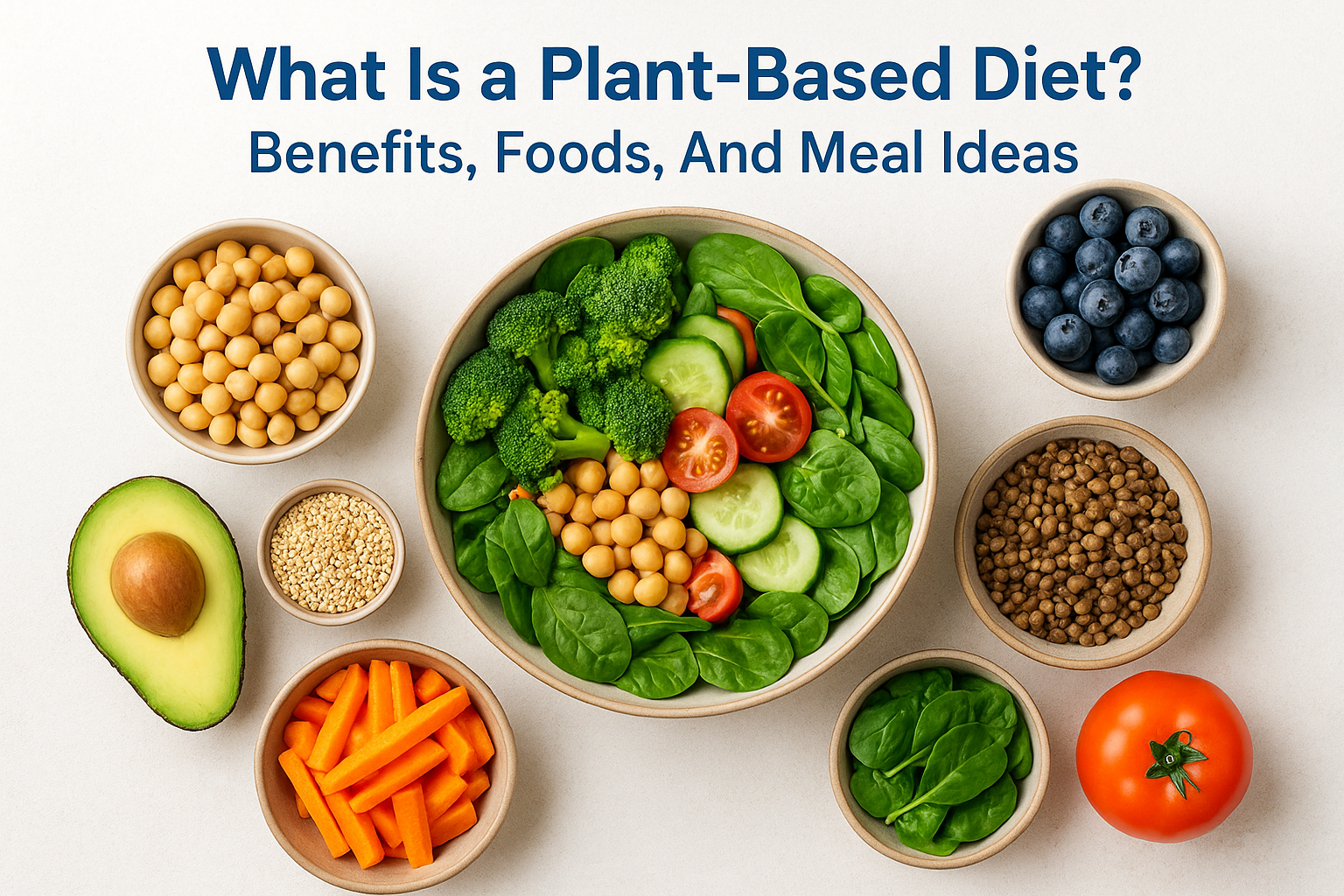
Vegetables and fruits are the most obvious starting point, and your goal is to eat a wide range across different colors and types. Leafy greens like spinach, kale, and Swiss chard are especially valuable. Whole grains such as oats, quinoa, brown rice, farro, and whole wheat bread give you sustained energy and meaningful amounts of fiber, B vitamins, and minerals. These foods should make up a large portion of your plate at most meals.

Here is a quick breakdown of core plant-based food categories:
| Category | Examples |
|---|---|
| Leafy greens | Spinach, kale, arugula, Swiss chard |
| Other vegetables | Broccoli, carrots, sweet potatoes, bell peppers |
| Fruits | Berries, apples, bananas, citrus, mangoes |
| Whole grains | Oats, quinoa, brown rice, barley, whole wheat |
Legumes, nuts, and seeds
Legumes are one of the most important food groups in plant-based eating because they deliver both protein and fiber in a single package. Lentils, chickpeas, black beans, kidney beans, and edamame all fit here. Nuts and seeds including almonds, walnuts, chia seeds, flaxseeds, and hemp seeds add healthy fats, protein, and micronutrients that support everything from brain function to hormone balance.
What about animal products?
This is where plant-based eating differs from veganism. Most plant-based frameworks allow small amounts of animal products, particularly when eaten occasionally or used as a flavoring rather than a main ingredient. Eggs and dairy are not automatically off-limits. Some people following a plant-based diet include plain yogurt, a small amount of cheese, or occasional fish while keeping the majority of their meals centered on plants. You decide how strict you want to be based on your health goals and personal preferences.
Foods to limit and common misconceptions
Understanding what is a plant based diet also means knowing what to pull back on. Highly processed foods and refined ingredients can technically be plant-derived, but they undermine the core purpose of this eating pattern. The goal is not just to reduce animal products but to build meals around foods that genuinely support your health.
What to eat less of
Refined grains like white bread, white rice, and most conventional pasta lose much of their fiber and nutrient content during processing. Added sugars found in sodas, flavored yogurts, sweetened cereals, and packaged snacks belong in the same category. Neither refined grains nor added sugars support the fiber intake and blood sugar stability that plant-based eating is known for promoting.
Limiting ultra-processed plant-based products, including many meat substitutes, vegan cheese alternatives, and packaged convenience foods, also matters. These products can contain high levels of sodium, refined oils, and artificial additives. Checking ingredient labels is just as important on a plant-based diet as it is on any other eating pattern.
A food labeled “plant-based” on its packaging does not automatically make it a healthy choice. Whole, recognizable ingredients are what drive the benefits.
Common misconceptions
One of the most persistent myths is that a plant-based diet automatically lacks enough protein. In reality, lentils, chickpeas, tofu, tempeh, edamame, and hemp seeds all deliver solid amounts of protein per serving. Planning your meals to include legumes and seeds at most sittings gives your body a steady and sufficient protein supply without animal products required.
Another common misunderstanding is that plant-based eating is expensive. Dried beans, lentils, oats, frozen vegetables, and brown rice are among the most affordable staples at any grocery store. Whole plant foods, especially in their dried or frozen forms, tend to cost less per serving than meat or packaged convenience items, making the approach accessible on most budgets.
Finally, many people assume that eating plant-based means giving up flavor or satisfaction. Herbs, spices, healthy fats from avocado and nuts, and umami-rich ingredients like mushrooms and fermented foods make plant-based meals deeply satisfying. The variety available to you is wide enough that meals rarely feel repetitive once you learn a few core preparation techniques.
Health benefits and what research suggests
The science behind what is a plant based diet and its effects on the body is more robust than most people realize. Decades of peer-reviewed research across multiple populations consistently show that people who eat primarily whole plant foods tend to live longer, experience fewer chronic conditions, and report better overall physical health than those eating heavy amounts of animal products and processed foods.
Heart health and blood pressure
Your cardiovascular system responds quickly to changes in diet. Plant-based diets are low in saturated fat and high in soluble fiber, both of which directly affect how your arteries function and how your body processes cholesterol. Soluble fiber, found abundantly in oats, lentils, and beans, binds to LDL cholesterol in your digestive tract and helps remove it before it enters your bloodstream.
Research published through the National Institutes of Health links whole-food plant-based diets to significantly reduced LDL cholesterol levels and lower systolic blood pressure compared to standard Western diets.
Potassium-rich foods like leafy greens, bananas, and sweet potatoes, all staples of plant-based eating, support healthy blood pressure regulation by counteracting the effects of sodium and helping your blood vessels relax.
Blood sugar control and diabetes risk
Fiber slows how quickly glucose enters your bloodstream, which smooths out blood sugar spikes after meals. Whole plant foods deliver this fiber in amounts that refined and processed diets rarely match. For people managing or trying to prevent type 2 diabetes, this distinction carries real weight.
Multiple large-scale studies, including data reviewed by the Centers for Disease Control and Prevention, show that plant-heavy eating patterns reduce the risk of developing type 2 diabetes by meaningful percentages compared to diets centered on processed meat and refined carbohydrates.
Weight management and cancer research
Whole plant foods are naturally lower in caloric density than most animal products and processed alternatives, which means you can eat satisfying portions without excessive calorie intake. People following plant-based diets consistently show lower average body mass index scores in population studies.
Cancer research adds another layer. Phytonutrients and antioxidants found in fruits, vegetables, and legumes help neutralize free radicals and reduce cellular damage linked to tumor development. While no single food prevents cancer, the overall nutrient profile of a plant-based diet creates conditions less favorable to chronic disease progression.
Key nutrients to plan for
One honest question people ask when they want to understand what is a plant based diet is whether it actually covers all your nutritional needs. The short answer is yes, with some planning. A few nutrients require deliberate attention because they appear in lower concentrations or less bioavailable forms in plant foods compared to animal products. Understanding which ones to watch makes the difference between thriving on a plant-based diet and feeling like something is off.
Knowing which nutrients to focus on is not a reason to avoid plant-based eating. It is simply a reason to plan your meals with intention.
Vitamin B12, iron, and zinc
Vitamin B12 is the nutrient most consistently associated with plant-based and vegan diets because it occurs naturally almost exclusively in animal products. If you follow a strictly plant-based diet with few or no animal products, supplementing with B12 is the most reliable way to meet your daily requirements. Both methylcobalamin and cyanocobalamin forms absorb well and are widely available.
Iron from plant foods, called non-heme iron, absorbs less efficiently than the heme iron found in meat. You can significantly improve absorption by pairing iron-rich foods like lentils, tofu, and pumpkin seeds with a source of vitamin C such as bell peppers, citrus, or tomatoes at the same meal. Zinc follows a similar pattern. Soaking and sprouting legumes and seeds before cooking reduces compounds that block zinc absorption and helps your body access more of what you eat.
Calcium and vitamin D
Calcium is available in several plant foods, including fortified plant milks, tofu made with calcium sulfate, kale, bok choy, and almonds. If your diet does not regularly include these foods, a calcium supplement can fill the gap without much effort. Vitamin D works alongside calcium to support bone density, and most people in the United States do not get enough of it regardless of their diet. Fortified foods and a daily D3 supplement are practical options, especially during winter months or for people who spend limited time outdoors.
Omega-3 fatty acids
Plant foods contain ALA, a type of omega-3 found in flaxseeds, chia seeds, walnuts, and hemp seeds. Your body converts ALA into EPA and DHA, the forms most active in brain and heart health, but the conversion rate is limited. Algae-based omega-3 supplements provide EPA and DHA directly from the same source fish get them from, making them a dependable plant-based option worth adding to your routine.
How to start a plant-based diet
Starting is often the hardest part, but once you understand what is a plant based diet in practical terms, the path forward becomes much clearer. You do not need to overhaul everything at once. The most sustainable approach begins with small, consistent changes that build on each other over time rather than a dramatic overnight shift that feels impossible to maintain.
Start with what you already eat
Your existing meals give you the best starting point. Look at what you eat regularly and identify which dishes are already plant-heavy or easy to adjust. A pasta dish with ground beef works just as well with lentils or mushrooms. Swapping one familiar meal at a time reduces the feeling that you are giving things up and keeps the process manageable.
Some simple swaps to try first:
- Replace ground meat with lentils or black beans in soups and sauces
- Use oats or a smoothie bowl instead of eggs for breakfast on weekdays
- Swap dairy milk for unsweetened oat or soy milk in coffee and recipes
- Add a handful of greens and a scoop of chickpeas to any lunch you already make
Batch cook your staples
Preparing foundational ingredients in bulk makes plant-based eating far less time-consuming during a busy week. Cook a large pot of brown rice, lentils, or chickpeas on the weekend and store them in your refrigerator. These ready-made ingredients slot into bowls, soups, salads, and wraps throughout the week without requiring you to start from scratch every evening.
Keeping your pantry stocked with dried beans, canned tomatoes, whole grains, and frozen vegetables also removes the biggest excuse for falling back on convenience foods. Preparation removes friction, and friction is what causes most people to abandon new eating habits before they stick.
Approach it as addition, not subtraction
Adding more plant foods to your plate before focusing on what to remove tends to produce better long-term results. When you prioritize getting more vegetables, legumes, and whole grains into each meal, animal products naturally take up less space without requiring willpower. Your palate adjusts gradually as you try new flavors and cooking methods, making the transition feel natural rather than forced.
Building a support system also helps. Connecting with others on a similar path and exploring reliable resources on plant-based nutrition gives you practical ideas and keeps you motivated once the initial enthusiasm settles.
Meal ideas and a simple 1-day menu
One of the easiest ways to understand what is a plant based diet in practice is to see what it looks like on an actual plate across a full day. Knowing a few reliable meal ideas gives you a starting template that you can adjust based on what you have on hand, what you enjoy, and how much time you have to cook.
Building meals that satisfy
Plant-based meals work best when you build them around three core components: a whole grain or starchy vegetable, a legume or protein-rich plant food, and plenty of non-starchy vegetables. This combination gives you fiber, protein, and enough variety to keep meals interesting without requiring complicated recipes. Adding healthy fats from avocado, nuts, or olive oil increases satiety and makes flavors more rounded.

A simple formula for any plant-based meal is grain + legume + vegetable, and you can rotate the ingredients endlessly without the meals feeling repetitive.
Some reliable meal ideas to build from:
- Breakfast: Overnight oats with chia seeds, blueberries, and almond butter
- Lunch: Quinoa bowl with roasted chickpeas, cucumber, cherry tomatoes, and tahini dressing
- Dinner: Lentil soup with crusty whole grain bread and a side salad
- Snacks: Apple slices with peanut butter, or a small handful of walnuts and pumpkin seeds
A simple 1-day menu to follow
The menu below gives you a concrete starting point without requiring specialty ingredients or extended cooking time. Each meal uses staple plant-based foods that are easy to find at any grocery store.
| Meal | What to eat |
|---|---|
| Breakfast | Oatmeal with flaxseeds, sliced banana, and a drizzle of maple syrup |
| Morning snack | A small handful of almonds and an orange |
| Lunch | Black bean and brown rice bowl with salsa, avocado, and shredded cabbage |
| Afternoon snack | Hummus with sliced bell peppers and cucumber |
| Dinner | Stir-fried tofu with broccoli, snap peas, garlic, and soy sauce over brown rice |
This single day covers fiber, plant protein, healthy fats, and a wide range of vitamins and minerals from recognizable, whole ingredients. You can repeat, swap, or expand on any of these meals as your confidence with plant-based cooking grows.

Final thoughts
Now that you understand what is a plant based diet and what it actually involves day to day, the next step is simply to start. You do not need a perfect plan or a full pantry overhaul. Picking one meal to shift toward whole plant foods this week is a reasonable and effective place to begin. Over time, those small changes compound into a meaningful shift in how you feel, how your body performs, and how your choices affect the environment around you.
The evidence supporting plant-based eating is consistent and substantial, covering heart health, blood sugar regulation, weight management, and long-term disease risk. More importantly, this approach is flexible enough to work within your real life. For practical guidance, organic product recommendations, and resources to support your wellness journey, explore everything Worganic Foods has to offer. Your next meal is a good place to start.
Discover more from Woganic Blog
Subscribe to get the latest posts sent to your email.