

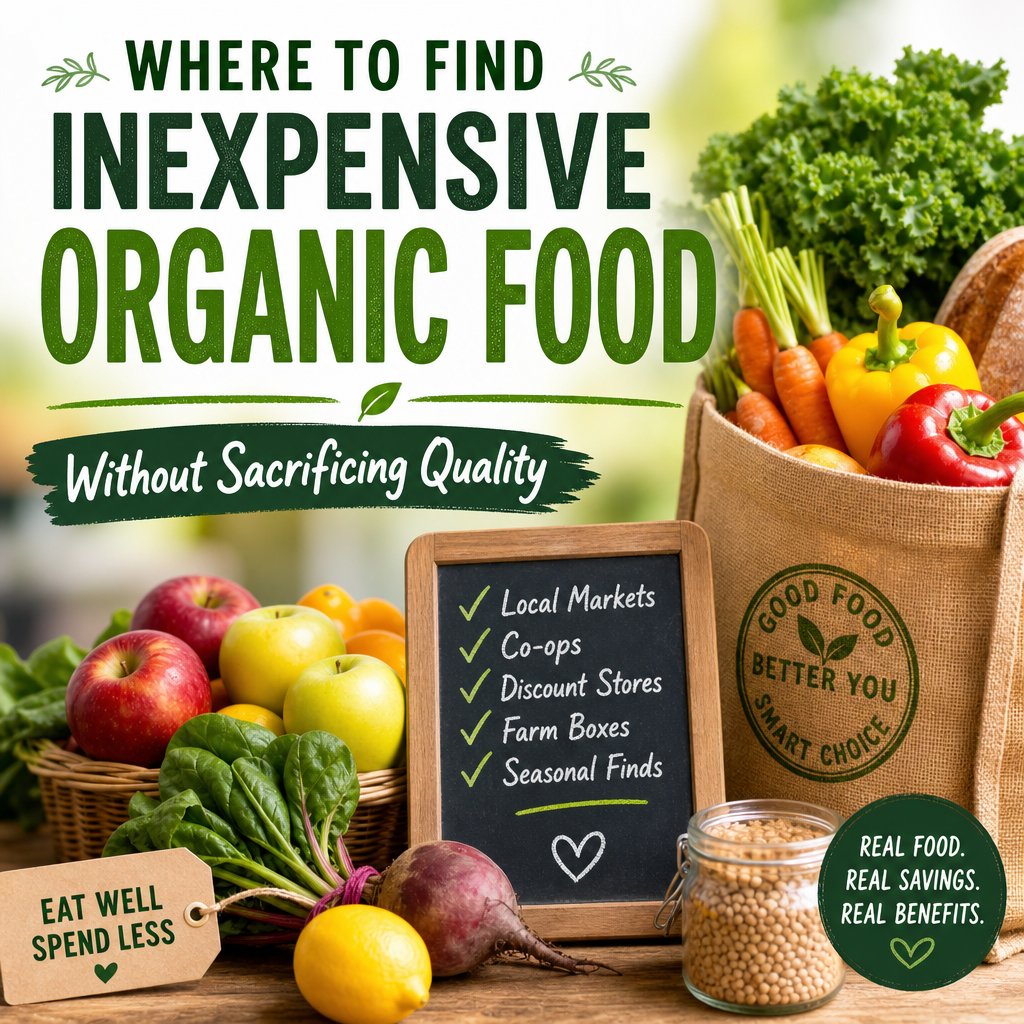
Finding inexpensive organic food can feel like a challenge. However, organic shopping does not have to strain your budget. With the right strategies, you can fill your cart with high-quality organic staples while keeping your grocery bill under control.
The key is to know where to shop, what to buy, and how to stretch each dollar without compromising freshness or nutrition. For more ways to make organic shopping practical, see Is Organic Food Worth It for Everyday Shopping?.
Inexpensive Organic Food: Start with the Right Stores

Not all grocery stores price organic products the same way. Some retailers consistently offer better value, especially on pantry staples, produce, and store-brand items.
Inexpensive Organic Food: Budget-Friendly Grocery Chains
Large grocery chains often have more competitive organic pricing than specialty health stores. Look for:
- Store-brand organic products
- Weekly organic produce sales
- Bulk bins for grains, beans, and nuts
- Loyalty programs or digital coupons
Store brands are often a smart way to buy inexpensive organic food because they usually come from the same suppliers as national brands, but they cost less. In addition, many chains rotate sales on the items you buy most often.
Inexpensive Organic Food: Discount and Warehouse Stores
Discount supermarkets and warehouse clubs can be excellent sources of organic basics. You may find lower prices on:
- Organic eggs
- Milk and dairy alternatives
- Frozen organic vegetables
- Oats, rice, and pasta
- Snack items and nut butters
Buying larger quantities makes sense if you know you will use the items before they expire. In addition, frozen organic foods are especially useful because they last longer and reduce waste.
Shop Seasonal Produce
Organic fruits and vegetables are usually cheapest when they are in season. Seasonal produce is often more abundant, which lowers prices and improves flavor.
For example:
- Spring: asparagus, spinach, peas
- Summer: berries, tomatoes, zucchini
- Fall: apples, squash, sweet potatoes
- Winter: cabbage, carrots, citrus
When produce is in season, it is easier to find inexpensive organic food that also tastes fresh and vibrant. Seasonal shopping can also inspire more variety in your meals.
Seasonal Shopping and Smart Swaps
If a fresh item costs too much, swap it for a seasonal alternative. For example, choose apples instead of out-of-season berries, or use cabbage instead of pricier salad greens. That way, you keep quality high without overspending.
Compare Fresh, Frozen, and Canned
Organic does not have to mean fresh-only. Frozen and canned organic foods can be just as nutritious, and they often cost less.
Why Frozen Works Well
Frozen organic fruits and vegetables are picked at peak ripeness and preserved quickly. As a result, they can retain excellent quality while offering better value than fresh items out of season.
Great frozen options include:
- Broccoli
- Spinach
- Mixed berries
- Peas
- Cauliflower rice
Choose Canned Wisely
Canned organic beans, tomatoes, pumpkin, and corn are convenient and affordable. Just check labels for low sodium and no added sugar when possible.
These pantry staples are ideal if you want inexpensive organic food that is quick to use in soups, stews, sauces, and grain bowls. Moreover, they make weeknight cooking much easier.
Buy in Bulk When It Makes Sense
Bulk buying can save money, especially for foods you use often. Organic bulk bins are often a hidden gem for budget-conscious shoppers.
Good Bulk Buys Include
- Brown rice
- Quinoa
- Lentils
- Oats
- Seeds
- Dried fruit
Buying bulk organic foods reduces packaging costs and can lower the price per pound. Just make sure you store everything properly in airtight containers to keep it fresh.
If you cook at home regularly, bulk shopping is one of the easiest ways to keep inexpensive organic food on hand.
Use Bulk Foods in Simple Meals
Bulk staples work best when you build repeatable meals around them. For example, oats can become breakfast bowls, lentils can become soup, and rice can anchor a quick stir-fry. Therefore, the food you buy goes further.
Focus on the Dirty Dozen
If buying all organic is not realistic, prioritize the produce most likely to carry pesticide residue. The Environmental Working Group publishes a list known as the Dirty Dozen each year.
You can review the current list on the Environmental Working Group’s Dirty Dozen guide.
These items often include:
- Strawberries
- Spinach
- Kale
- Apples
- Grapes
- Peaches
Choosing organic for these high-priority items and conventional for lower-risk produce can help you balance quality and cost. This approach gives you the benefits of organic food where it matters most without overspending.
Pair the Dirty Dozen with the Clean Fifteen
To save even more, buy conventional versions of lower-residue produce when appropriate. That simple habit helps you protect your budget while still making smart organic choices where they matter most.
Try Farmers Markets and Local CSAs
Local farmers markets and community-supported agriculture programs can sometimes offer better prices than major grocery stores, especially for fresh produce in peak season.
Farmers Markets
Some vendors reduce prices near closing time to avoid taking unsold produce home. You can often ask about:
- Imperfect or “seconds” produce
- Bundle deals
- End-of-day discounts
CSA Boxes
A CSA, or community-supported agriculture subscription, delivers regular boxes of produce from a local farm. While some CSAs seem pricey upfront, they can be a good value if you use everything in the box and enjoy seasonal variety.
These options can help you access inexpensive organic food while supporting local growers.
To compare another practical shopping approach, you may also want to read Does Aldi Sell Organic Food? Yes—Here’s What to Buy in 2026.
Don’t Overlook Store Loyalty and Coupons
Many shoppers miss savings because they do not use the tools already available to them. Digital coupons, rewards apps, and store loyalty programs can add up quickly.
Look for:
- Personalized discounts on organic items
- Buy-one-get-one deals
- Rebate apps
- Weekly ad specials
A few small savings each trip can make organic food much more affordable over time. In addition, comparing weekly ads before you shop can prevent impulse buys.
Keep a Simple Organic Pantry
A well-stocked pantry helps you avoid expensive last-minute purchases. If you keep a few organic basics at home, you can cook more meals from scratch and reduce food waste.
Pantry Staples to Keep on Hand
- Oats
- Rice
- Beans
- Pasta
- Canned tomatoes
- Peanut or almond butter
- Frozen vegetables
When your pantry is ready, it becomes much easier to build meals around affordable organic ingredients instead of relying on costly convenience foods.
Make Pantry Meals Work Harder
Pantry meals save money because they rely on ingredients you already own. For example, you can turn rice and beans into a filling dinner, or use oats for breakfast and baking. As a result, fewer ingredients go to waste.
Final Thoughts
You do not need a luxury grocery budget to enjoy organic food. By shopping seasonal produce, using frozen and canned options, buying in bulk, and comparing store prices, you can find inexpensive organic food that still meets your standards for quality.
The smartest approach is a flexible one. Mix and match store brands, local deals, and priority organic purchases to make healthy eating both realistic and affordable.
If you want a broader overview of the value of organic groceries, this USDA resource explains organic labeling and standards: USDA Organic Standards and Labels.
Discover more from Woganic Blog
Subscribe to get the latest posts sent to your email.

Leave a Reply
Your email is safe with us.