

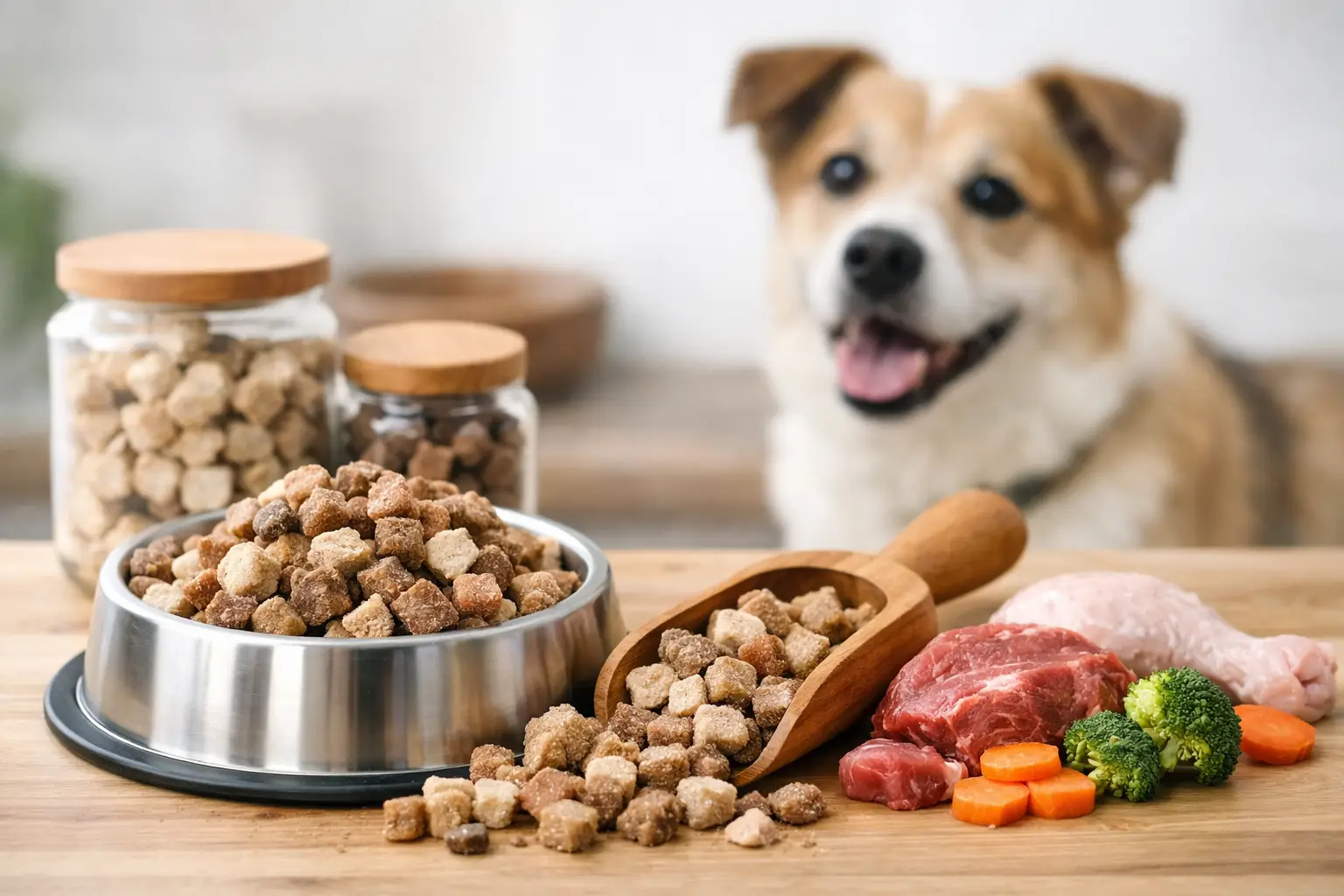
That first look at the ingredient panel tells you almost everything. If a bag of dog food leads with real meat, organ meat, and recognizable whole-food additions instead of vague fillers, it usually earns a second glance. In this freeze dried raw dog food review, the goal is simple: help you decide whether this style of feeding fits your dog, your budget, and your values.
Freeze-dried raw has become especially appealing to pet parents who already think carefully about cleaner ingredients, minimal processing, and everyday wellness. It promises raw-style nutrition with less mess than frozen patties and more convenience than homemade meals. But it is not automatically the right choice for every household, and the details matter.
What freeze-dried raw dog food really is
Freeze-dried raw dog food starts with raw ingredients, usually muscle meat, organs, bone, and produce, that are preserved by removing moisture at low temperatures. That process helps maintain texture, flavor, and much of the original nutrient profile without cooking the food in the traditional way.
For many owners, the biggest draw is the balance between nutrition and practicality. You get a shelf-stable product that is lighter to store and easier to portion than frozen raw. Some formulas are meant to be served dry, while others work best when rehydrated with water or broth.
That said, freeze-dried and raw are not magic words. Quality can vary quite a bit between brands. One recipe may be rich in named animal proteins and thoughtfully sourced ingredients, while another leans heavily on added supplements to make up for a less impressive base formula.
Freeze dried raw dog food review: what stands out
Across the category, the best freeze-dried raw foods tend to share a few strengths. They are usually high in animal protein, low in unnecessary fillers, and easy to scan for ingredient transparency. Named meats such as beef, turkey, lamb, or chicken are a good sign. Organ meats like liver and heart add natural nutrients. Limited synthetic additives can also be a plus if the whole-food foundation is strong.
From a wellness perspective, many dogs do well on these formulas. Owners often report smaller stools, solid energy, good palatability, and improved coat condition. That does not mean every dog thrives on every raw-style food, but digestibility can be a real advantage when the recipe is well made.
Convenience is another major win. If you are drawn to less processed feeding but not interested in handling raw meat every day, freeze-dried products offer a practical middle ground. They travel well, store easily, and can be used as a full meal, topper, or high-value training treat depending on the product.
The trade-off is price. Freeze-dried raw food is usually one of the most expensive ways to feed a dog on a per-day basis, especially for medium and large breeds. For some families, it works best as a topper added to a high-quality dry food rather than as the full diet.
How to judge ingredient quality
A good freeze dried raw dog food review should go beyond marketing words like natural or premium. Ingredient quality is where the real story is.
Start with the first five ingredients. Ideally, you want clearly named animal ingredients, not generic terms like poultry meal or meat by-product. Whole-prey-inspired recipes that include muscle meat, organs, and ground bone often feel more aligned with the raw-feeding philosophy than formulas that rely mostly on one cut of meat plus a long list of added vitamins.
Next, look at carbohydrate content. Many freeze-dried raw foods keep carbs fairly low, which appeals to owners seeking a more meat-focused diet. Some recipes include produce such as pumpkin, blueberries, spinach, or carrots in modest amounts. Those can be useful additions, but they should support the formula, not dominate it.
Sourcing also matters. Brands that explain where their meats come from and whether animals are grass-fed, pasture-raised, or responsibly sourced tend to inspire more confidence. Not every company will check every sustainability box, but transparency is a strong sign that the brand takes quality seriously.
Nutrition, safety, and the raw question
One reason this category gets so much attention is the belief that less processed food may better support canine health. There is some logic there. Minimal heat processing may preserve certain nutrients and enzymes better than conventional kibble production.
Still, raw feeding is not a one-size-fits-all decision. Safety is a real part of the conversation. Because freeze-dried raw products are not cooked in the usual sense, handling guidelines matter. Households with very young children, elderly family members, or immunocompromised individuals may want to be especially cautious.
It also matters whether the food is labeled complete and balanced for your dog’s life stage. Some freeze-dried products are intended only for intermittent or supplemental feeding. Others meet nutritional standards for adult maintenance or all life stages. That difference is easy to miss, and it is one of the most important details on the package.
If your dog has a medical condition, a history of pancreatitis, food sensitivities, or kidney issues, richer raw-style formulas may require extra care. A food can be high quality and still not be the right match for your individual dog.
Freeze dried raw vs kibble vs frozen raw
If you are comparing feeding styles, freeze-dried raw sits in an interesting middle space. It is generally less processed than kibble and more convenient than frozen raw. For busy households, that can be the deciding factor.
Kibble remains the easiest and most budget-friendly option for many people. It is widely available, simple to store, and often formulated with a long shelf life in mind. But ingredient quality and processing levels vary dramatically, and some owners want a fresher-feeling alternative.
Frozen raw can be excellent for people committed to a full raw routine, but it demands freezer space, thawing time, and more direct handling. Freeze-dried raw removes much of that friction. You open the bag, measure the portion, and serve it with far less cleanup.
For many eco-conscious shoppers, the best answer is not perfection. It is choosing the most realistic option you can sustain. A thoughtfully selected freeze-dried topper used consistently may be more practical than an ambitious raw plan that falls apart after two weeks.
What dogs tend to do best on it
Freeze-dried raw often appeals most to picky eaters, dogs that need extra encouragement at mealtime, and owners looking for cleaner ingredient decks. The aroma and texture can be very enticing, especially compared with standard dry food.
Dogs with mild digestive sensitivity may also respond well to limited-ingredient or single-protein recipes, assuming the formula avoids their specific triggers. On the other hand, very rich foods can upset some stomachs during the transition period, so gradual introduction is worth the patience.
Large active dogs may enjoy the nutritional profile but can make the monthly cost hard to justify. In those cases, using freeze-dried raw as a topper instead of the full bowl often feels like the sweet spot.
How to shop smarter in this category
When comparing brands, it helps to ignore the front of the bag for a minute. Turn straight to the guaranteed analysis, feeding directions, and ingredient list. Look for named proteins, clear life-stage labeling, and realistic feeding costs based on your dog’s weight.
Watch for formulas padded with peas, potatoes, or starch-heavy ingredients if your goal is a truly meat-forward diet. Also pay attention to crumbly texture and rehydration instructions. Some products are easy to serve as-is, while others really do better with added moisture.
Brand reputation counts too. Companies that test for pathogens, explain manufacturing standards, and offer customer support around feeding transitions are usually making a stronger effort to earn trust.
At Woganic, that kind of clarity matters because cleaner living is easier when labels are honest and choices feel grounded in real information, not hype.
Is freeze-dried raw dog food worth it?
For the right dog and the right household, yes. The strongest products in this category offer impressive ingredient quality, excellent palatability, and a more natural-feeling feeding option that does not require a freezer or a major lifestyle overhaul.
But worth it depends on what you need most. If budget is tight, a premium freeze-dried raw food may not be realistic as a complete diet. If convenience matters almost as much as ingredient quality, it may be one of the best compromises available. And if your dog has special health needs, the smartest move is to evaluate the formula with your veterinarian before making a full switch.
The most helpful mindset is to treat freeze-dried raw as a tool, not a trend. Whether you use it as the main meal or as a nutrient-rich topper, the best choice is the one that supports your dog’s health in a way you can maintain with confidence and care.
Discover more from Woganic Blog
Subscribe to get the latest posts sent to your email.



Leave a Reply
Your email is safe with us.