
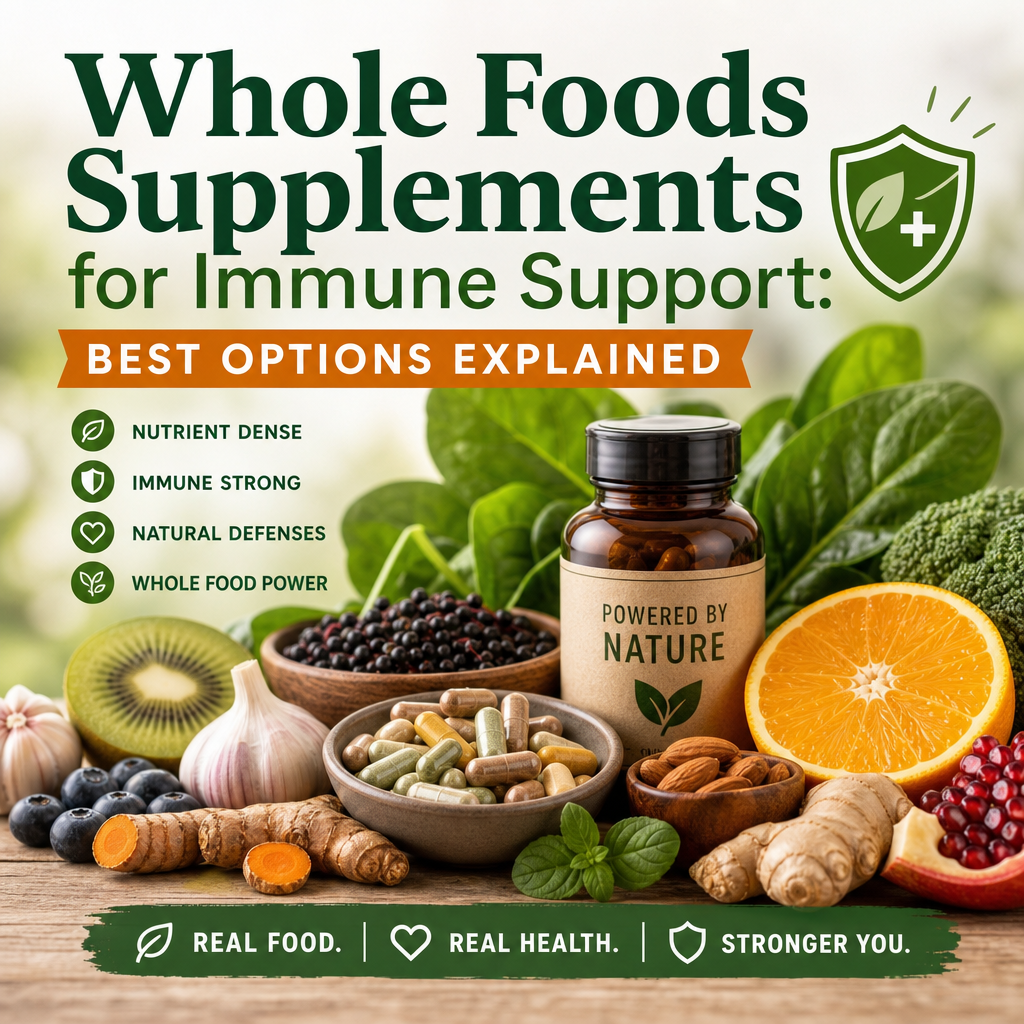
Supporting the immune system is a year-round priority, and many people are turning to whole foods supplements as a more natural way to help maintain everyday wellness. Unlike highly processed products that isolate a single ingredient, whole foods supplements are typically made from nutrient-dense foods in forms the body can recognize and use more easily. As a result, they can be a helpful addition to a balanced diet, healthy sleep habits, and stress management for people looking to strengthen immune resilience through nutrition.
The immune system relies on a wide range of vitamins, minerals, antioxidants, and plant compounds to function properly. When diet alone may not consistently provide enough of these nutrients, whole foods supplements can help fill the gap in a more food-based, approachable way. For a deeper look at food-based formulas, see our complete guide to organic food supplements.
What Makes Whole Foods Supplements Different?

Whole foods supplements are formulated from concentrated food sources rather than synthetic or heavily isolated compounds. Instead of creating nutrients in a laboratory and then delivering them in a stripped-down form, these products often use ingredients like berries, mushrooms, leafy greens, sea vegetables, fermented foods, and sprouted seeds.
Food-Based Nutrients and Natural Cofactors
One of the main advantages of these supplements is the presence of naturally occurring cofactors. In whole foods, vitamins and minerals are accompanied by enzymes, phytonutrients, fibers, and other compounds that may support absorption and utilization. Because of that, many people prefer a food-first approach when choosing immune-supporting supplements.
Gentle and Broad-Spectrum Support
Because they come from food sources, whole foods supplements often provide a more balanced nutrient profile than single-nutrient formulas. Rather than aiming at one isolated mechanism, they may support multiple areas at once, including antioxidant defense, gut health, and the body’s normal inflammatory response.
Why Immune Support Depends on More Than Vitamin C
Vitamin C often gets the spotlight when people think about immune health, but the immune system needs a much wider nutritional foundation. In fact, a diverse range of nutrients supports the body’s defense systems and helps maintain normal immune function.
Key Nutrients That Matter
Some of the most important immune-supportive nutrients include:
- Vitamin C, found in acerola, camu camu, citrus, and berries
- Vitamin D, often discussed for immune regulation
- Zinc, important for immune cell function
- Selenium, which supports antioxidant activity
- Iron, needed for oxygen transport and immune processes
- Vitamin A, which plays a role in mucosal health
- Polyphenols and flavonoids, found in colorful fruits and plants
Whole foods supplements often combine several of these nutrients in one formula, so they can support the body with a more comprehensive nutrient profile. For example, organic vitamin C options can complement a broader immune routine.
Popular Whole Foods Ingredients for Immune Health
If you’re shopping for immune support, certain whole-food ingredients show up again and again for good reason. These ingredients are widely appreciated for their nutritional density and traditional use in wellness routines.
Berry-Based Antioxidant Blends
Berries such as elderberry, blueberry, acai, and camu camu are rich in antioxidant compounds. These natural plant chemicals help protect cells from oxidative stress, which is important for overall wellness. Elderberry, in particular, is popular in seasonal formulas because of its long history in herbal and food-based health traditions.
Mushroom Complexes
Mushrooms such as reishi, shiitake, maitake, and turkey tail are often included in whole foods supplements for immune support. They contain beta-glucans and other bioactive compounds that are studied for their role in immune balance. While mushrooms are not a cure or treatment, they can be a valuable part of a nutrient-dense supplement routine.
Green Food Powders
Spirulina, chlorella, wheatgrass, barley grass, and alfalfa are common green ingredients in whole-food formulas. These nutrient-rich plants provide chlorophyll, minerals, and antioxidants, and they can help round out a supplement stack focused on overall wellness.
Fermented Foods and Probiotics
Gut health and immune health are closely connected. That’s why many whole foods supplements include fermented ingredients such as fermented vegetables, kefir cultures, or probiotic blends. A healthy digestive system helps the body absorb nutrients efficiently and also supports the body’s normal immune defenses.
How Whole Foods Supplements May Support the Immune System
Whole foods supplements don’t “boost” the immune system in a simplistic way. Instead, they help nourish the systems that allow immune function to operate normally. That distinction matters, especially in a market full of exaggerated claims.
Supporting Antioxidant Defense
Every day, the body encounters oxidative stress from environmental pollutants, poor diet, lack of sleep, and daily wear and tear. Antioxidant-rich whole foods supplements can help support the body’s natural defense against these stressors, which is one reason they are often recommended during times of increased demand.
Helping Maintain Healthy Inflammation Response
A healthy immune system knows when to respond and when to stand down. Nutrients from whole food sources may support the body’s normal inflammatory pathways, helping maintain balance rather than overstimulation.
Nourishing the Gut-Immune Connection
A significant portion of the immune system is located in the digestive tract. Whole foods supplements that include prebiotics, probiotics, fiber, and fermented ingredients can help support gut health, which in turn supports immune function.
What to Look for in a Quality Whole Foods Supplement
Not all products labeled “natural” or “whole food” are created equal. Reading labels carefully can make a big difference in finding a supplement that is worth your investment.
Choose Transparent Ingredient Lists
A quality formula should clearly list the food sources used and avoid hiding behind vague proprietary blends. You want to know whether the product includes real fruit extracts, mushroom fruiting bodies, fermented plants, or simply traces of trendy ingredients.
Look for Third-Party Testing
Independent testing helps confirm product purity, potency, and safety. This is especially important for supplements sourced from plants, mushrooms, or algae, which may be vulnerable to contamination if not carefully processed.
Check for Added Sugars and Fillers
Some chewable or gummy supplements contain unnecessary sugars, artificial colors, or synthetic fillers. A cleaner formula is usually better if your goal is health support rather than candy-like convenience.
Consider Bioavailability
The best whole foods supplements should be formulated with absorption in mind. That may mean combining nutrients with supportive compounds or selecting forms that are easier for the body to use.
How to Use Whole Foods Supplements Wisely
Supplements work best as part of a bigger picture. No capsule, powder, or gummy can replace foundational habits like sleep, hydration, movement, and a nutrient-rich diet.
Pair Supplements with a Balanced Diet
The more colorful and varied your meals are, the better. Whole foods supplements should complement meals built around vegetables, fruits, nuts, seeds, legumes, quality proteins, and healthy fats.
Be Consistent
Immune support is not about one-day fixes. Consistency matters more than occasional use, especially with food-based supplements that are designed to support long-term wellness.
Follow Serving Guidelines
Even natural ingredients can be overused. More is not always better, and taking excessive amounts of certain nutrients may be counterproductive. Always follow the label directions and be mindful of total intake from multiple products.
Who May Benefit from Whole Foods Supplements?
These supplements can be especially useful for people who want a more natural wellness routine, have limited dietary variety, or prefer to avoid synthetic formulas. Busy professionals, parents, older adults, athletes, and people under seasonal stress may all appreciate the convenience of an immune-supportive formula made from food-based ingredients.
That said, people with health conditions, those who are pregnant or breastfeeding, and anyone taking medication should speak with a qualified healthcare professional before beginning a new supplement. For reference, the NIH Office of Dietary Supplements provides consumer guidance on vitamin C and related nutrition topics.
Final Thoughts
Whole foods supplements offer a practical, food-centered way to support immune health without relying on highly processed formulas. By delivering vitamins, minerals, antioxidants, and beneficial plant compounds in recognizable forms, they can help reinforce the body’s natural defenses and overall resilience. When chosen carefully and used consistently alongside healthy habits, they can become a valuable part of a well-rounded wellness routine.
Discover more from Woganic Blog
Subscribe to get the latest posts sent to your email.