
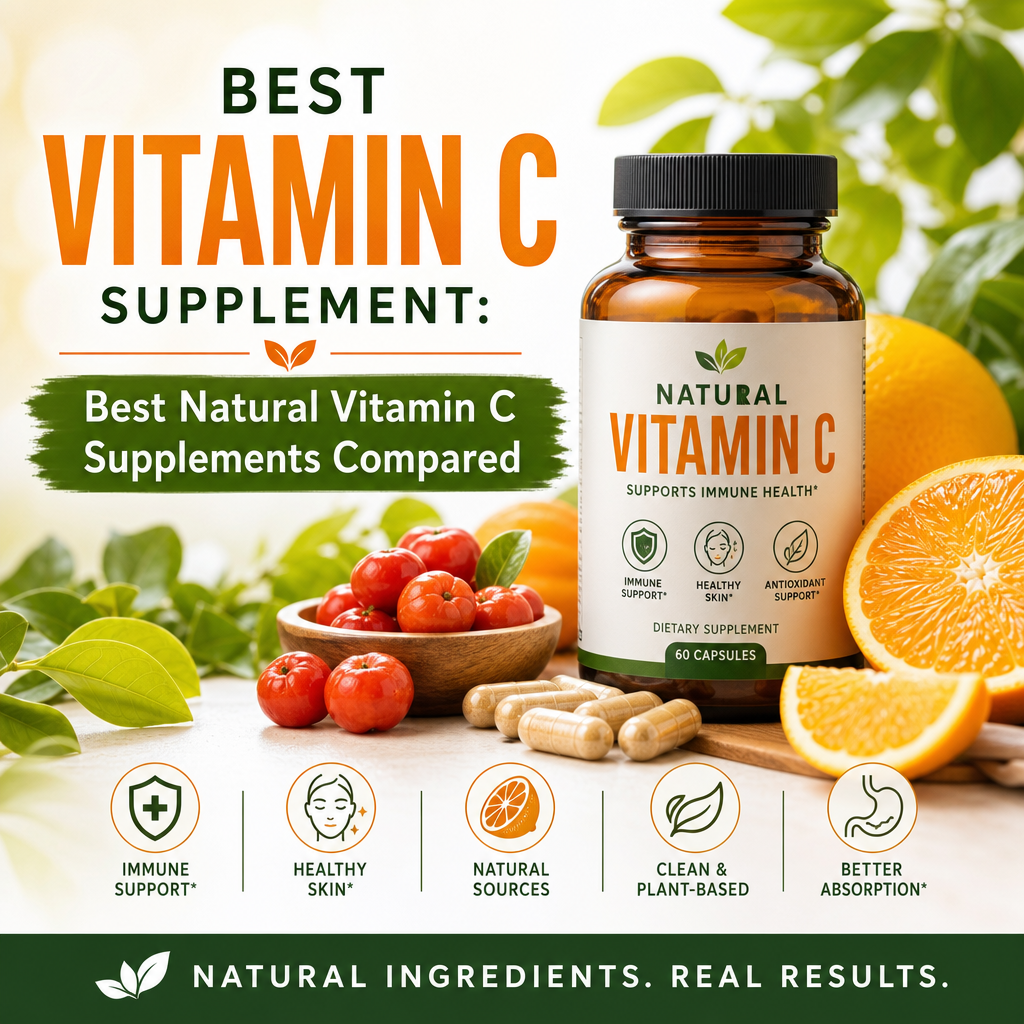
Vitamin C is one of the most popular nutrients people look for when they want daily immune support, antioxidant protection, and overall wellness. However, with so many products on the market, finding the best vitamin c supplement can feel overwhelming. If you prefer cleaner formulas and whole-food sourcing, choosing the best natural vitamin c supplement becomes even more important.
This guide compares what to look for in organic vitamin C supplements and highlights the features that make a product worth adding to your routine. You can also read more about organic vitamin C benefits for skin, immunity, and energy for a closer look at why this nutrient matters. For scientific context on vitamin C’s role in health, see the NIH Office of Dietary Supplements vitamin C fact sheet.
Best Vitamin C Supplement: Why Choose an Organic Vitamin C Supplement?

Organic vitamin C supplements are often made from fruit-derived sources like acerola cherry, camu camu, amla, or citrus bioflavonoids. In many cases, these ingredients offer a more natural approach than synthetic ascorbic acid alone.
Many people prefer organic options because they:
- Use plant-based sources
- Avoid artificial colors and fillers
- May include naturally occurring cofactors
- Fit cleaner-label wellness routines
That said, “organic” does not automatically mean better for everyone. Instead, the ideal choice depends on absorption, ingredients, dosage, and how gentle the formula is on digestion.
What Makes the Best Vitamin C Supplement?
When you compare vitamin C supplements, look beyond the front label. A good product should balance quality, effectiveness, and convenience.
1. Source of Vitamin C
The source matters. Some supplements use pure ascorbic acid, while others use whole-food ingredients such as:
- Acerola cherry
- Camu camu
- Amla berry
- Rose hips
- Citrus extracts
Whole-food sources are often favored by people searching for the best natural vitamin c supplement because they may contain supporting compounds like bioflavonoids.
2. Form and Absorption
Vitamin C comes in several forms, including:
- Capsules
- Tablets
- Gummies
- Powders
- Liposomal liquids
Capsules and powders are common for clean formulations. Meanwhile, liposomal vitamin C is often marketed for enhanced absorption, and buffered forms may be gentler on the stomach.
3. Ingredient Quality
A strong supplement should have:
- Minimal added sugar
- No unnecessary fillers
- Non-GMO ingredients
- Third-party testing when possible
- Organic certification where relevant
If you want the best vitamin c supplement, ingredient transparency should be a top priority. For a broader look at ingredient-focused wellness, see natural remedies for effortless everyday wellness.
4. Dosage
Most supplements provide anywhere from 250 mg to 1,000 mg per serving. Higher doses are not always better, so it often makes sense to start with a moderate daily amount. Many people do well with smaller servings, especially when the product includes food-based vitamin C.
Best Organic Vitamin C Supplement Types Compared
Below are the most common organic vitamin C supplement styles and how they stack up.
Whole-Food Vitamin C Capsules
These are often made from organic acerola, amla, or camu camu. They’re popular because they’re simple, easy to take, and usually free from artificial extras.
Best for: Everyday wellness and people who want a natural formula
Pros: Clean label, plant-based, easy to use
Cons: May offer less vitamin C per capsule than synthetic formulas
Organic Vitamin C Powders
Powders can be a flexible option for those who want to customize their dose. They may mix into water, juice, or smoothies, which makes them easy to fit into a routine.
Best for: People who want adjustable servings
Pros: Convenient for larger doses, often minimal ingredients
Cons: Taste can be tart or unpleasant
Buffered Vitamin C
Buffered formulas combine vitamin C with minerals like calcium or magnesium to reduce acidity. As a result, these can be a smart choice for sensitive stomachs.
Best for: People who want a gentler formula
Pros: Easier on digestion, often well tolerated
Cons: Not always organic or whole-food based
Liposomal Vitamin C
Liposomal products are designed to support absorption by wrapping vitamin C in fat-like particles. However, these products are often more expensive than standard supplements.
Best for: People prioritizing absorption
Pros: Innovative delivery, may be gentle
Cons: Higher price, not always organic
How to Choose the Best Natural Vitamin C Supplement
The right supplement depends on your goals. Here are a few simple guidelines:
- For clean ingredients: Choose a whole-food organic capsule
- For flexibility: Choose a powder
- For sensitive digestion: Choose a buffered form
- For advanced absorption: Consider liposomal vitamin C
- For daily convenience: Choose capsules or gummies with low sugar
If your main priority is simplicity, a product made from organic acerola or camu camu is often a strong contender for the best natural vitamin c supplement. In addition, it can fit easily into a clean-label wellness routine.
What to Watch Out For
Not all vitamin C supplements are created equal. Be cautious of products that:
- Use vague “proprietary blends”
- Contain high sugar or artificial sweeteners
- Make exaggerated health claims
- Lack clear sourcing information
- Include unnecessary additives
A short ingredient list is usually a good sign, and it often makes comparison shopping much easier.
Choosing the Best Vitamin C Supplement for Daily Use
For daily use, choose a formula that fits your body and your budget. Some people want a simple capsule, while others prefer a powder they can mix into a drink. Either way, quality should come first.
For example, a whole-food supplement may suit someone who wants a natural routine. On the other hand, a buffered or liposomal option may work better if digestion or absorption is the main concern. Therefore, the best choice is usually the one you can take consistently.
Organic, Whole-Food, or Synthetic?
Organic and whole-food formulas often appeal to people who want fewer additives. Synthetic vitamin C can still be effective, but whole-food sources may provide extra plant compounds. Because of that, many shoppers compare both before deciding.
Capsules, Powders, or Gummies?
Capsules are simple and portable. Powders offer flexible dosing, and gummies are easy to remember, although they may contain more sugar. So, the format matters almost as much as the source.
If you want a supplement that feels easy to stick with, pick the form that matches your habits. Then you will be more likely to use it regularly.
Final Thoughts
The best vitamin c supplement is the one that fits your needs, feels good to take, and uses high-quality ingredients. For many shoppers, the best natural vitamin c supplement will be an organic, whole-food formula made from acerola, camu camu, amla, or citrus bioflavonoids.
Whether you prefer capsules, powders, or buffered options, focus on purity, dosage, and source quality. In the end, that approach helps you choose a vitamin C supplement that supports your wellness routine without adding unnecessary extras.
Sponsored affiliate links are included in this content. I may earn a commission if you purchase through Walmart links at no additional cost to you.
Discover more from Woganic Blog
Subscribe to get the latest posts sent to your email.