
That half-used bottle of mystery cleaner under the sink is often the moment people start asking how to make eco friendly products at home. You want a house that feels fresh and clean, but not at the cost of harsh fumes, plastic waste, or ingredient labels that read like a chemistry quiz. The good news is that a more natural routine does not have to be complicated, expensive, or overly precious.
For most households, the best homemade eco-friendly products are the ones you will actually use on a Tuesday night when the counters are sticky and the laundry is piling up. That means keeping recipes simple, choosing ingredients with more than one purpose, and knowing where homemade works beautifully and where a store-bought option may still be the smarter choice.
Why make eco friendly products at home?
The biggest benefit is control. When you make your own household basics, you know exactly what is going into them and what is not. That can be especially appealing if you are trying to reduce synthetic fragrance, limit certain preservatives, or create a lower-tox lifestyle for kids and pets.
There is also a waste angle. Many homemade products can be stored in reusable glass jars or spray bottles, which helps cut back on single-use packaging. And because many DIY formulas rely on a short list of pantry-style ingredients, you are less likely to end up with five specialty products doing nearly the same job.
Still, eco-friendly does not automatically mean better in every case. Some homemade products have a shorter shelf life, some are less effective on heavy-duty jobs, and some popular DIY ideas found online can actually damage surfaces. A sustainable home works best when it is realistic, not rigid.
The basic ingredients worth keeping on hand
If you want to learn how to make eco friendly products at home without turning your kitchen into a lab, start with a small core set of ingredients. White vinegar is useful for cutting mineral buildup and freshening certain surfaces. Baking soda is a gentle abrasive and odor absorber. Castile soap is one of the most versatile choices for light cleaning. Washing soda is stronger than baking soda and works well in laundry formulas. Distilled water helps keep sprays cleaner and more stable, especially if you are storing them for a while.
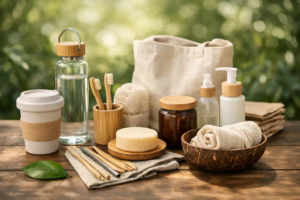
You can also keep a few reusable containers, measuring spoons, and clean cloths dedicated to your DIY routine. Amber or opaque bottles are helpful if a formula includes light-sensitive ingredients. Labels matter too. Even natural products should be clearly marked so no one mistakes a cleaner for something edible.
A note on essential oils
Essential oils are often added for scent, but they are optional. They do not automatically make a product safer or more effective, and some can irritate skin or be risky around pets. If you use them, keep the amount modest and choose them for a real purpose, not just because every DIY recipe says you should.
3 easy products to start with
The easiest path is to begin with a few high-use items. That gives you quick wins without overcomplicating your routine.
All-purpose cleaner
For many homes, this is the first product to replace. In a clean spray bottle, combine 1 cup distilled water, 1 cup white vinegar, and a few drops of unscented castile soap. If you enjoy a light scent, add a small amount of lemon or lavender essential oil.
Use this on sealed countertops, the outside of appliances, and other everyday wipe-down jobs. Skip vinegar on natural stone like marble or granite, since the acidity can etch the surface. For those areas, a gentler mix of water and a tiny amount of castile soap is the better option.
Soft scrub for sinks and tubs
Mix baking soda with enough castile soap to form a spreadable paste. Apply it with a sponge, scrub gently, and rinse well. This works nicely for soap scum and routine bathroom cleaning without the sharp smell of conventional scrubs.
The trade-off is that it may take a little more elbow grease on stubborn buildup. Homemade cleaners can be very effective, but they are not always instant-gratification products. Sometimes the greener route is simply a bit slower.
Laundry booster
A simple laundry booster can help freshen loads, especially towels or workout clothes. Mix 2 cups washing soda with 2 cups baking soda and store it in a jar. Add 1 to 2 tablespoons per load alongside your regular detergent.
This is usually a better choice than trying to replace detergent entirely with a DIY mix. Many homemade laundry soap recipes do not clean as effectively in modern machines and can leave buildup over time. A booster supports cleaning without asking a homemade formula to do too much.
How to make eco friendly products at home for body care
Homemade personal care can be appealing, but it requires a little more caution than household cleaning. Skin is more sensitive, formulas are more prone to contamination, and preservation matters. The safest route is to keep things very simple and make small batches.
A basic sugar scrub is an easy option. Combine 1 cup organic sugar with enough jojoba, olive, or coconut oil to create a soft, scoopable texture. Store it in a clean jar and use it within a few weeks. Because water can introduce bacteria, avoid dipping wet hands directly into the container.
Lip balm is another approachable project if you enjoy DIY. A simple blend of beeswax, shea butter, and a carrier oil can create a nourishing balm with minimal ingredients. If you prefer vegan formulas, candelilla wax can work, though the texture may need adjusting because it behaves differently than beeswax.
Deodorant is where expectations matter. A homemade version using arrowroot powder, baking soda, and coconut oil works well for some people and irritates others. Baking soda can be too strong for sensitive skin, especially after shaving. If you try it, patch test first and be ready to switch to a gentler store-bought option if needed. Wellness should feel supportive, not like a skin experiment gone wrong.
Smarter swaps for the kitchen
The kitchen is a great place to reduce waste because small changes get repeated every day. Beeswax wraps are a popular reusable alternative to plastic wrap. You can make them at home by infusing cotton fabric with beeswax and a small amount of resin or oil, though this project takes more setup than a cleaner spray.
If you want a simpler start, make reusable cleaning cloths from old cotton T-shirts or towels. Cut them into workable squares, hem the edges if you want them to last longer, and keep a basket in the kitchen for easy access. This is one of the most eco-friendly projects because it extends the life of something you already own.
You can also make a produce wash with cool water and a splash of white vinegar, but plain running water is often enough for most fruits and vegetables. This is one of those areas where more is not always better. Eco-friendly living is not about adding steps just because they sound wholesome.
Common mistakes to avoid
A lot of DIY content makes homemade products sound foolproof. They are not. Mixing vinegar and castile soap, for example, is common, but the soap can partially break down in acidic solutions and reduce cleaning performance. Bleach should never be mixed with vinegar or other cleaners. Hydrogen peroxide also needs careful handling and proper storage.
Another mistake is making huge batches. Freshness matters, especially for body care products and anything that contains water. Smaller batches are usually more practical, safer, and less wasteful.
It also helps to avoid assuming natural means non-toxic for everyone. Essential oils, borax, and even baking soda can be irritating depending on the person, surface, or pet in the home. Read, test, adjust.
When homemade is worth it and when it is not
The best DIY products are the ones that are simple, stable, and repeatedly useful. Surface sprays, soft scrubs, cloth alternatives, and small-batch body scrubs usually fit that description. They save packaging, cut down on mystery ingredients, and make greener habits feel genuinely doable.
On the other hand, sunscreen, broad-spectrum disinfectants, and complex skincare are usually better left to professionally formulated products. Safety testing, proper preservation, and verified performance matter too much to improvise. Choosing a trusted eco-conscious product can still be a very sustainable decision.
That balance is part of a healthier home. You do not need to make everything from scratch to live more naturally. Even one or two homemade staples can shift your routine in a cleaner, more intentional direction.
If you are just getting started, pick the product you use most often and make that first. A simple cleaner, a reusable cloth, or a gentle scrub is enough to prove that greener living can fit into real life – and once it does, the next swap feels much easier.
Switch to Eco-Friendly Laundry Detergent
Discover plant-based, eco-conscious laundry detergents designed for cleaner clothes and a cleaner home.
- Eco-friendly ingredients
- Gentle on sensitive skin
- Low-waste & sustainable options
- Fresh, clean scent choices
As a Walmart affiliate, I may earn from qualifying purchases.
Discover more from Woganic Blog
Subscribe to get the latest posts sent to your email.